

La Palma is the wildest of the Canary Islands and the one that surprised us the most. After loving Tenerife, where we hiked, visited cute towns, and enjoyed the climate, we looked for other islands offering the same, and La Palma ended up being one of our favorite Canary Islands so far. This guide covers what to do, where to stay, and what we’d skip, based on a full road trip across both sides of the island.
Things to do in La Palma
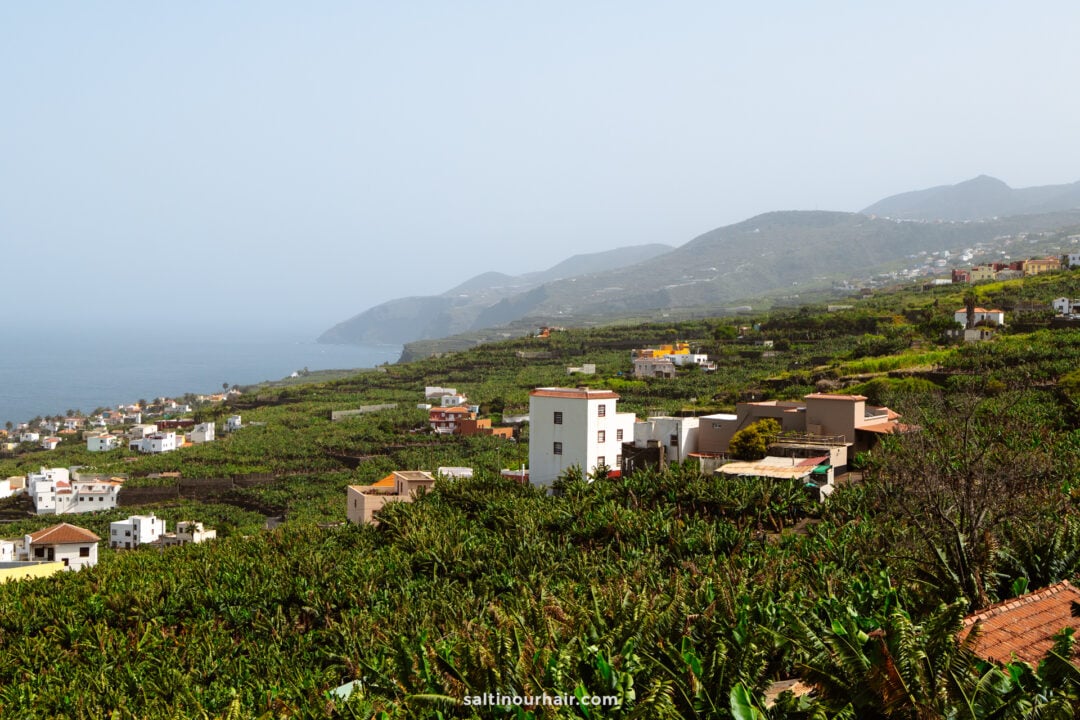
La Palma is perfect if you love being active, as it is not really a resort-style island. It is a green, dramatic, less-touristy Canary Island with black-sand beaches and lots of things to do. When driving around the island, you’ll also notice the endless banana plantations!
Fun fact: La Palma only has 85,000 people, but over 6 million banana plants.
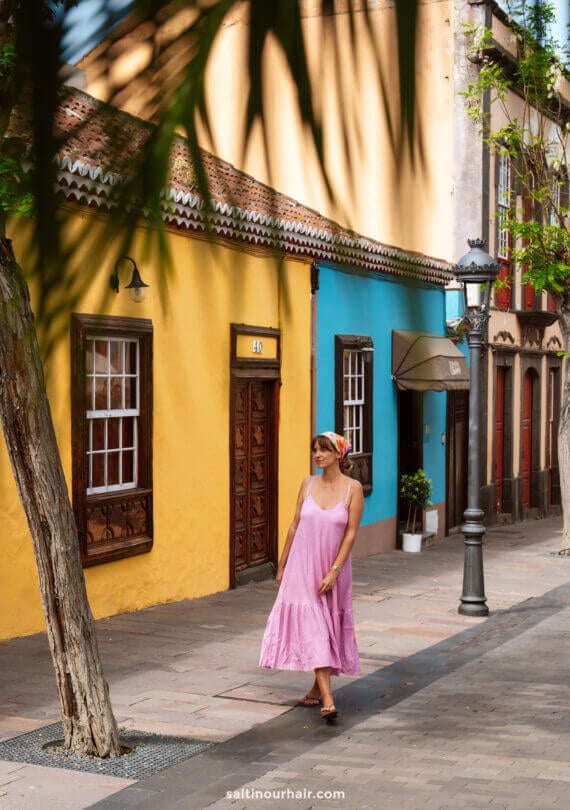
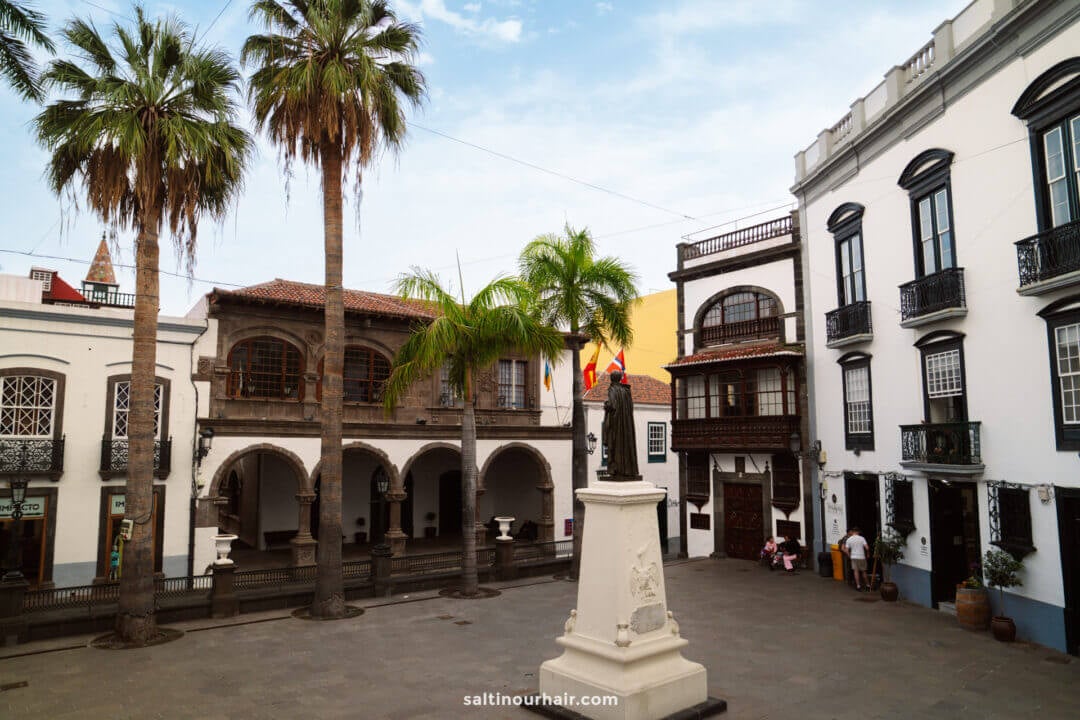
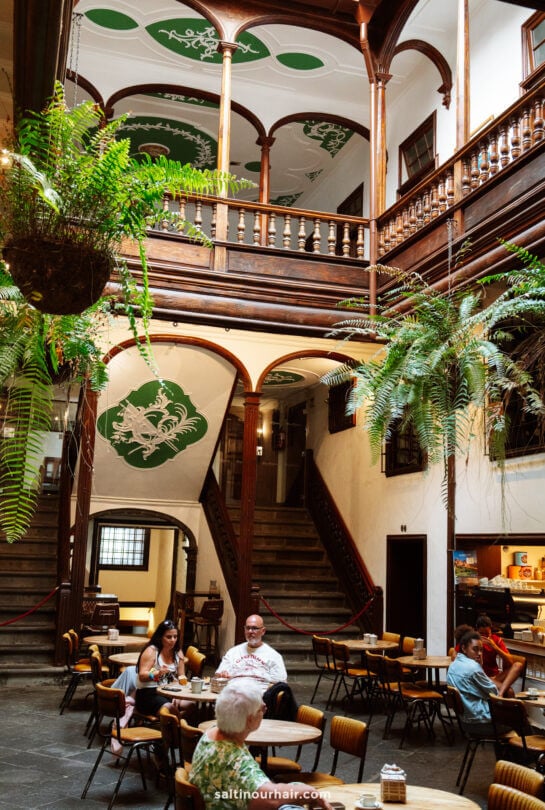
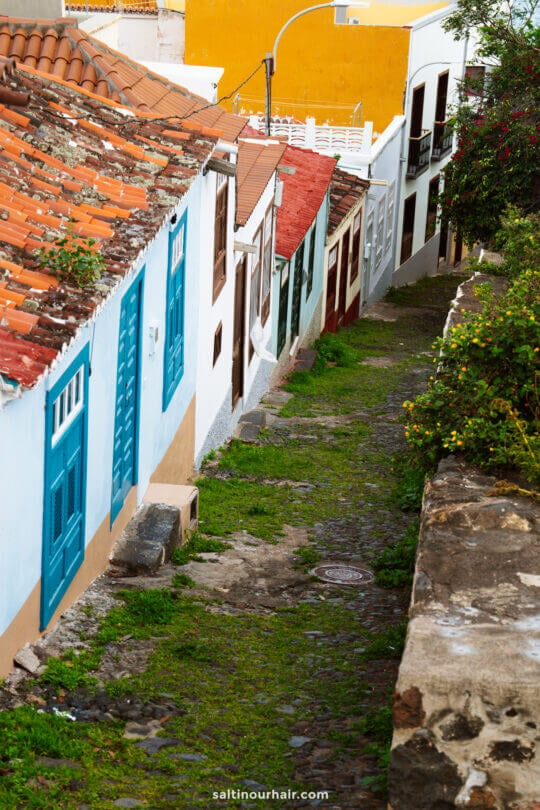
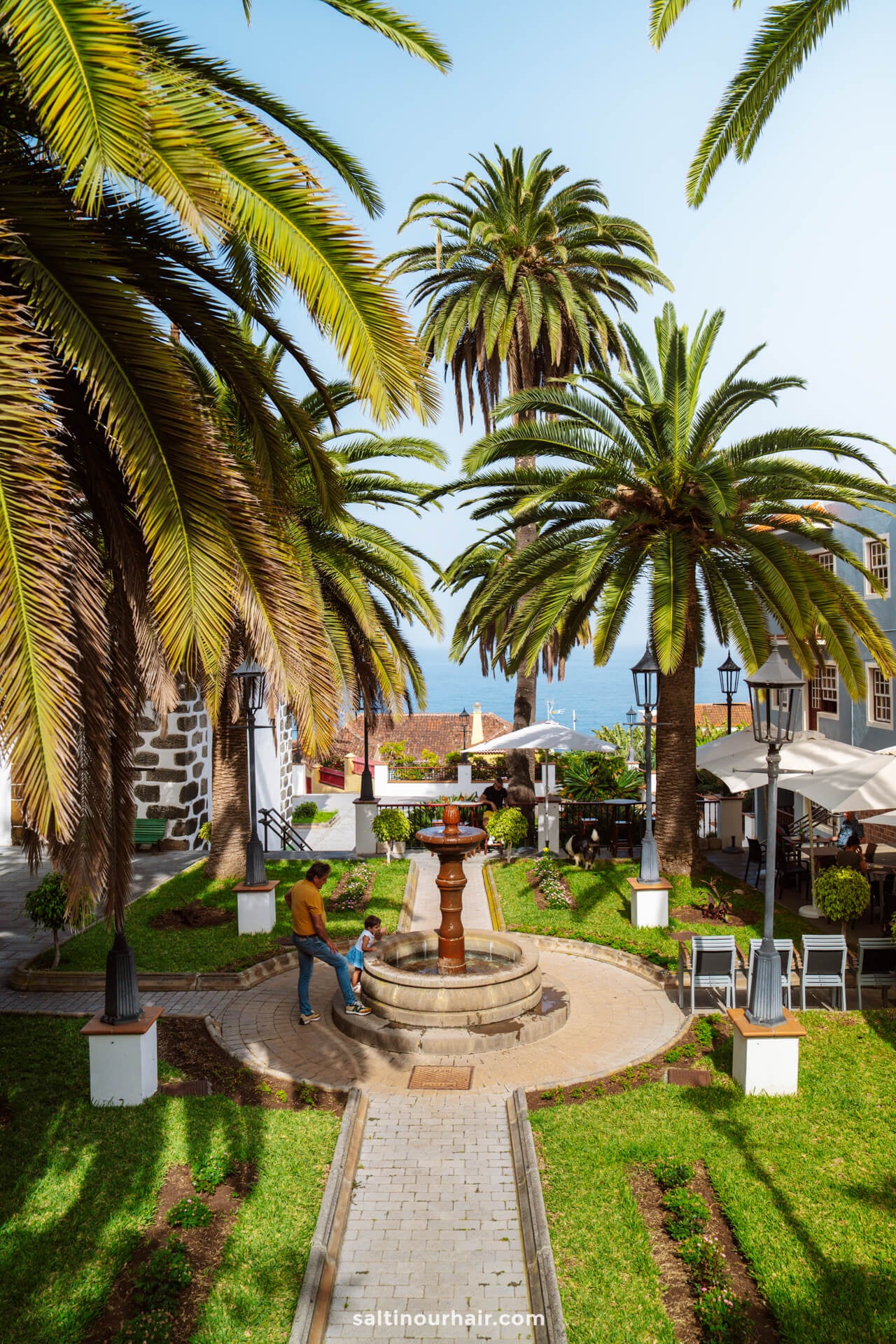
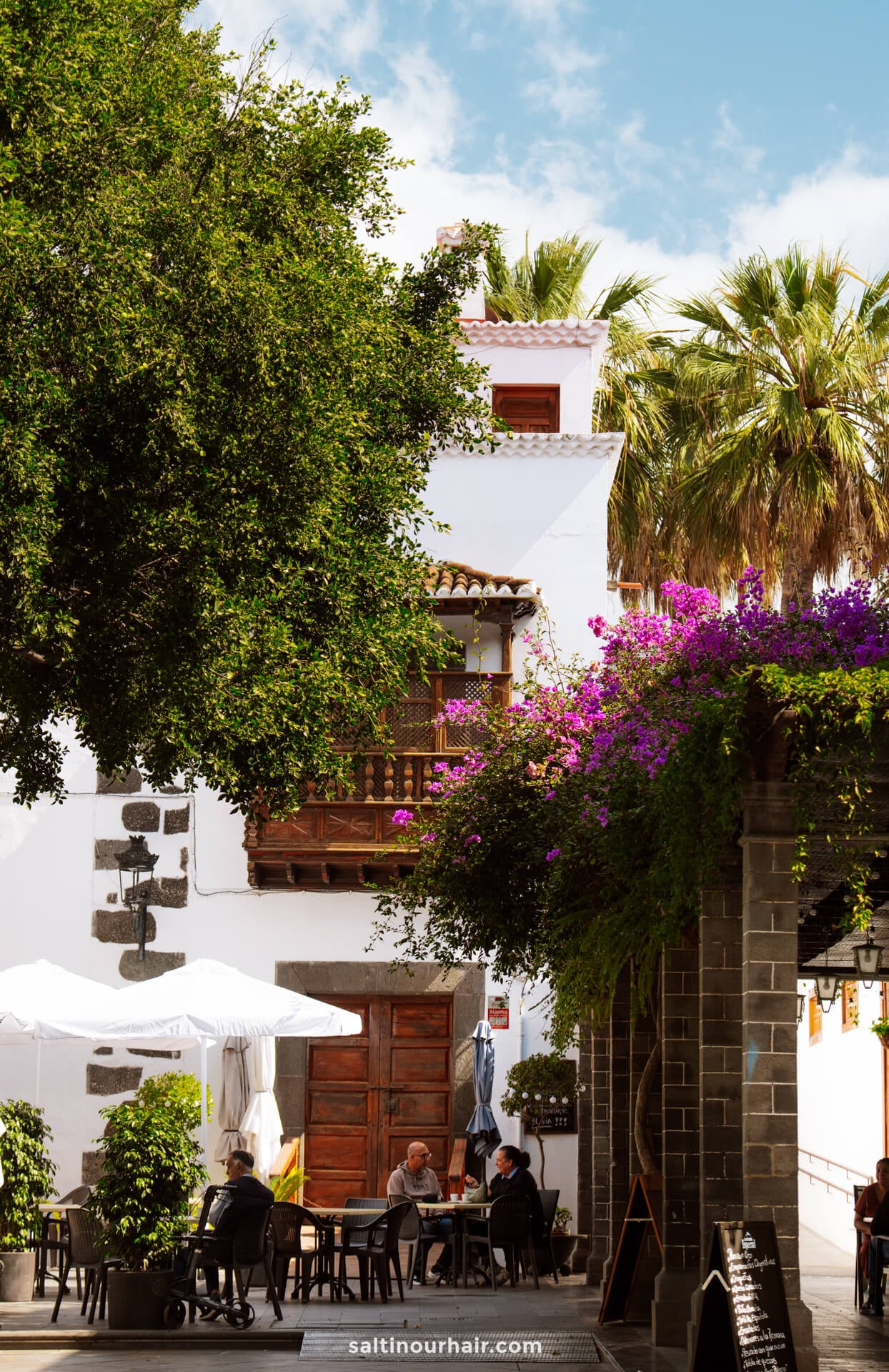
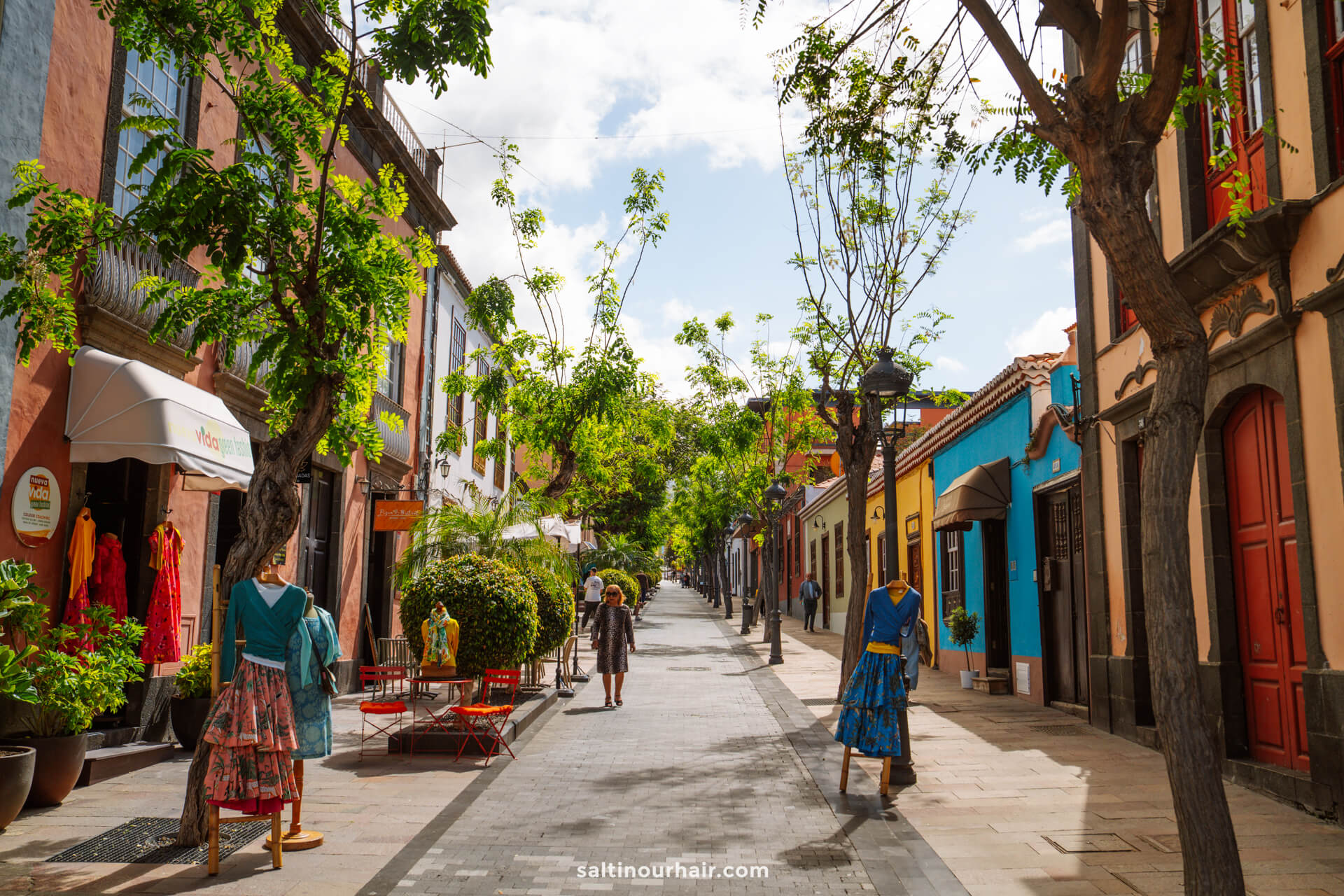
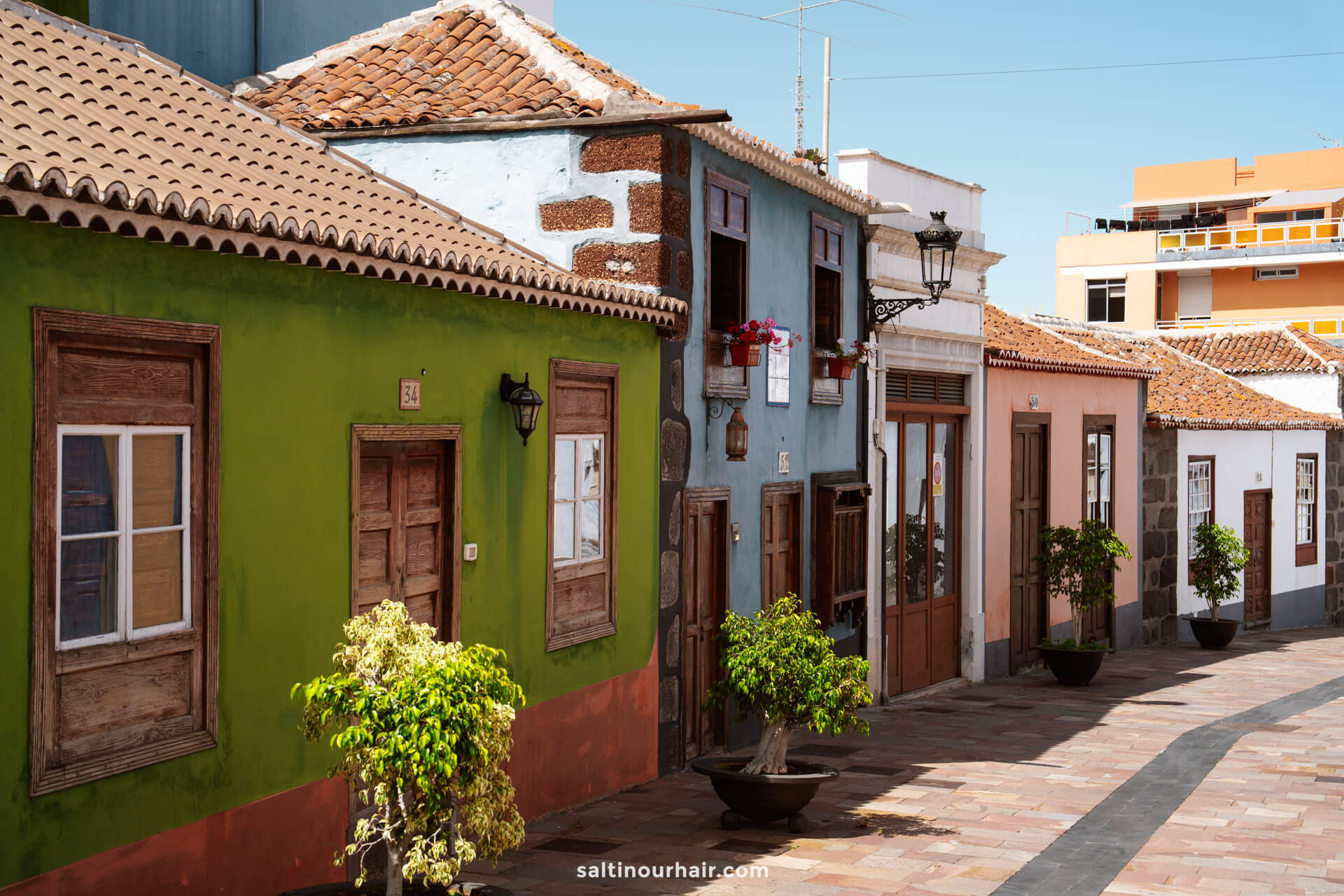
Start at Plaza de España, a stunning town square with beautiful architecture all around. Have a coffee at the stunning Don Manuel Cafe as well. After that, walk up Calle Anselmo Pérez de Brito, one of the prettiest streets on the island. Follow it north to the Artesanía Chandy souvenir shop on the corner, which is a very picturesque spot.
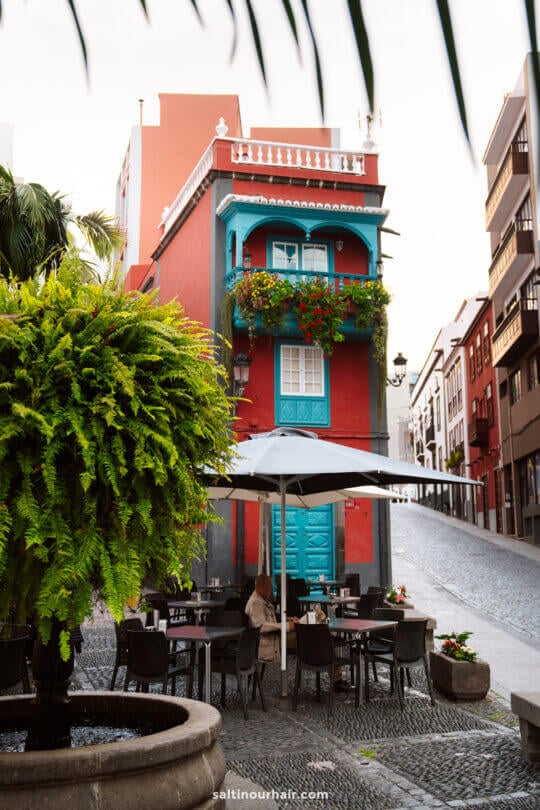
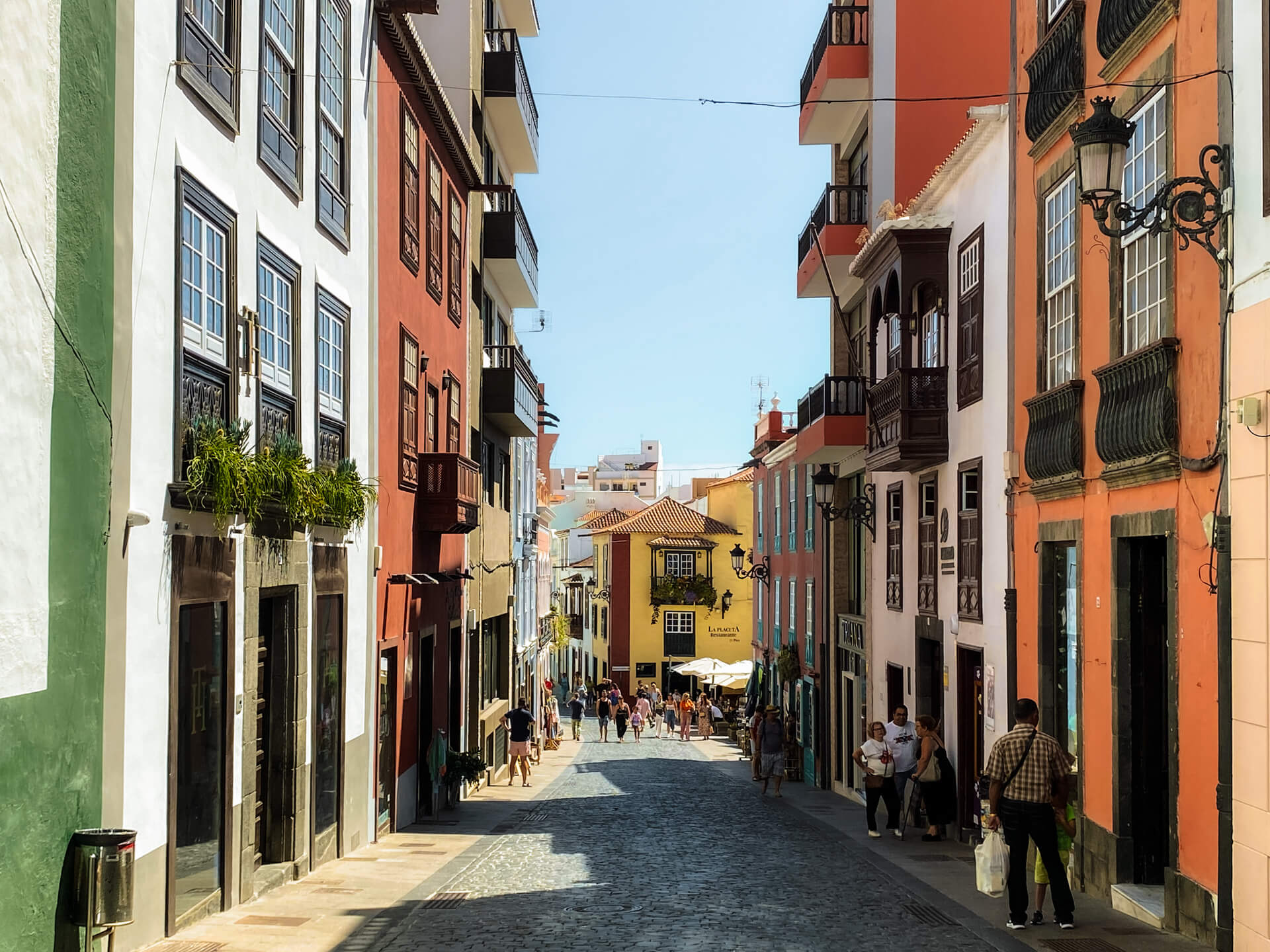
Go right, and you’ll come out at Balcones de la Avenida Marítima, where you’ll find the iconic flower-covered wooden balconies near the ocean.
Tip: For dinner, we ate at Mestizo Restaurante: homemade tacos, a really good ceviche, fresh fish, nice terrace!
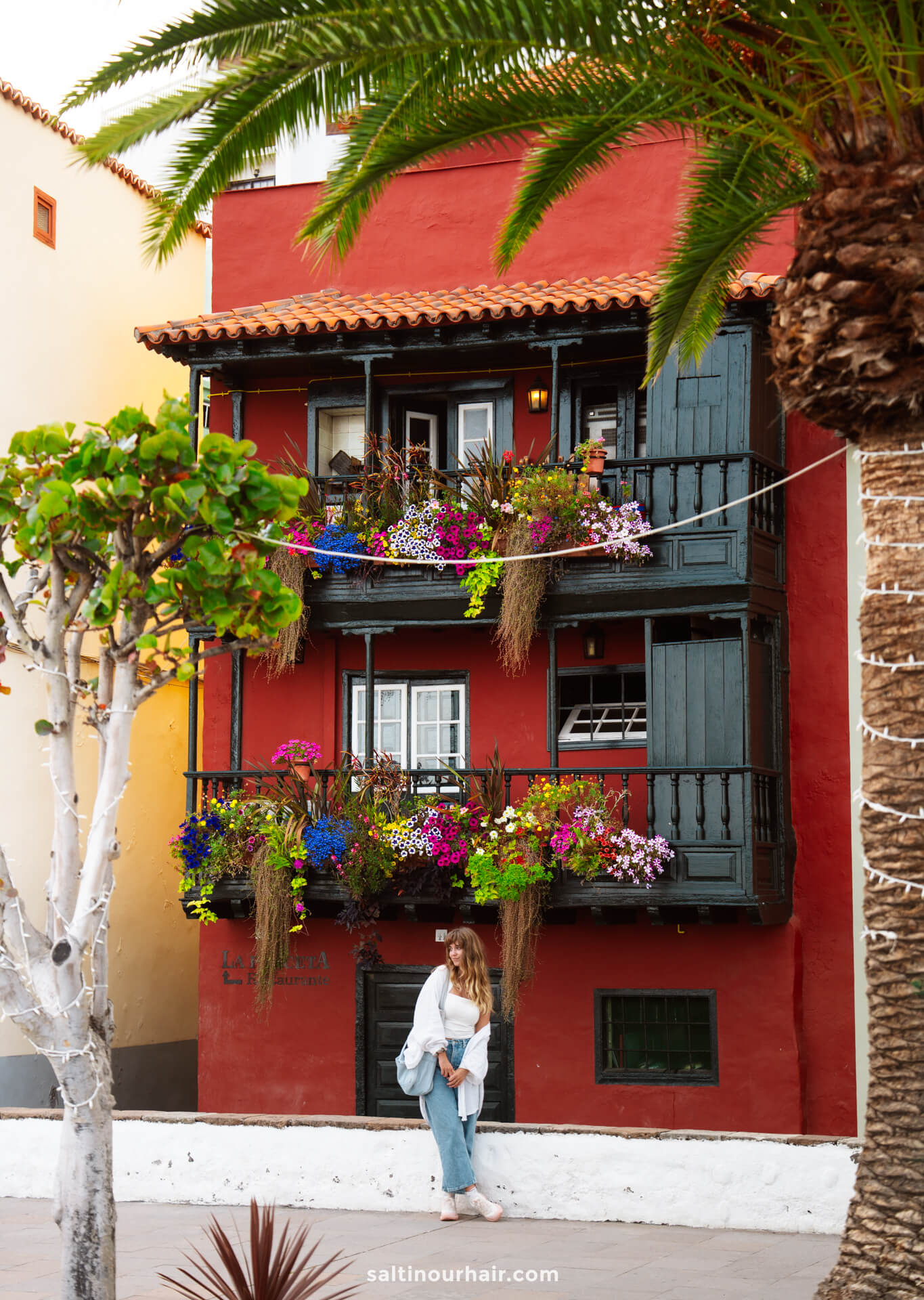
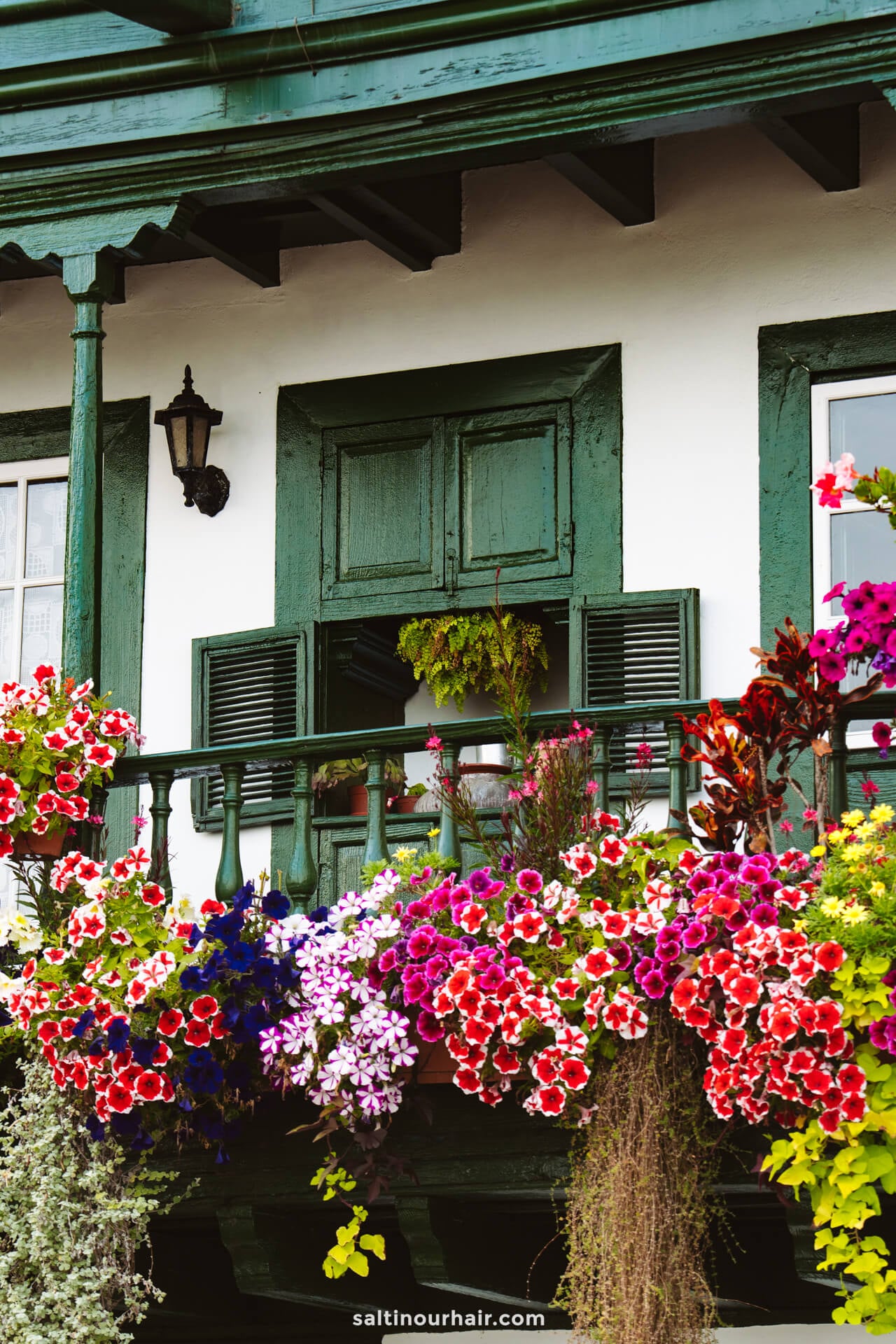
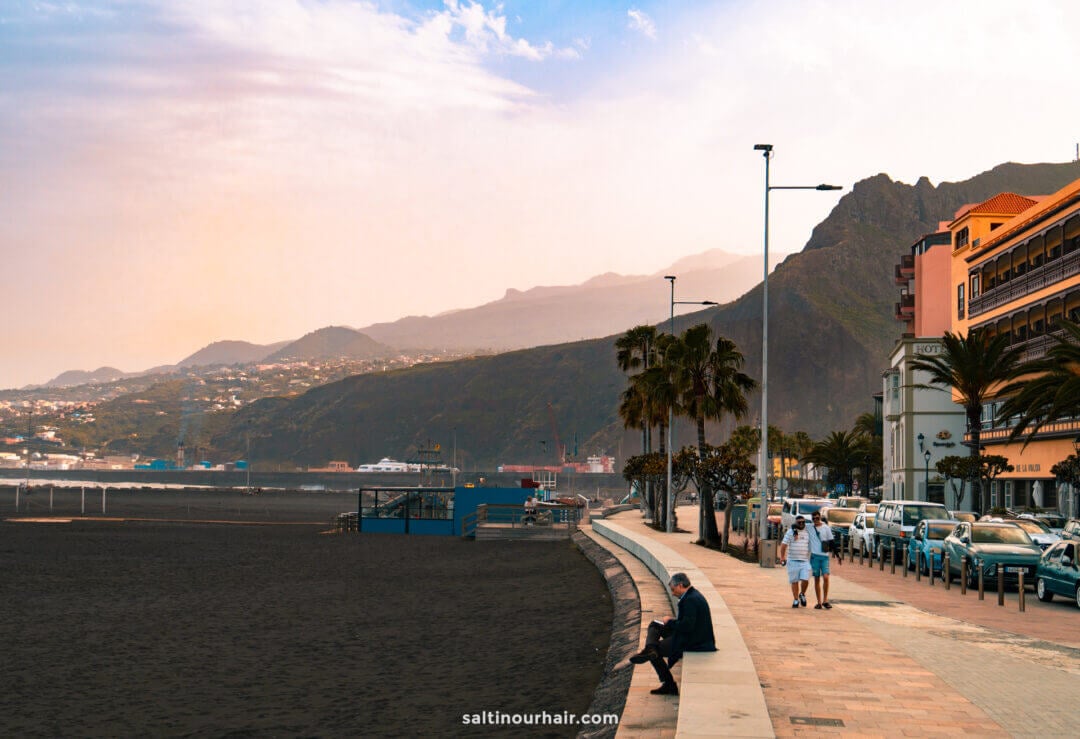
We stayed about a 10-minute walk outside the center at Casa Antonita, which was comfortable, a bit uphill, but still easy to walk to. This area is actually as beautiful and well worth the visit! We saved all of our favorite spots in our La Palma map for you.
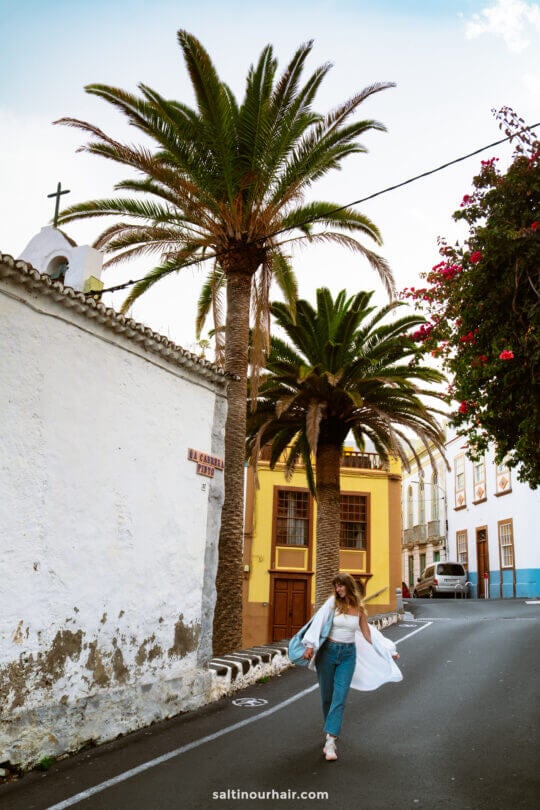
Mirador Espigón Atravesado hike
Our favorite hike on this side was Mirador Espigón Atravesado. A moderate walk of around 3 hours (there and back) through laurel forest, mostly shaded, with a few small waterfalls and ending at a small viewpoint perched in a valley with higher mountains on every side. There’s a short staircase to the viewpoint that looks dramatic in photos and even better in person.
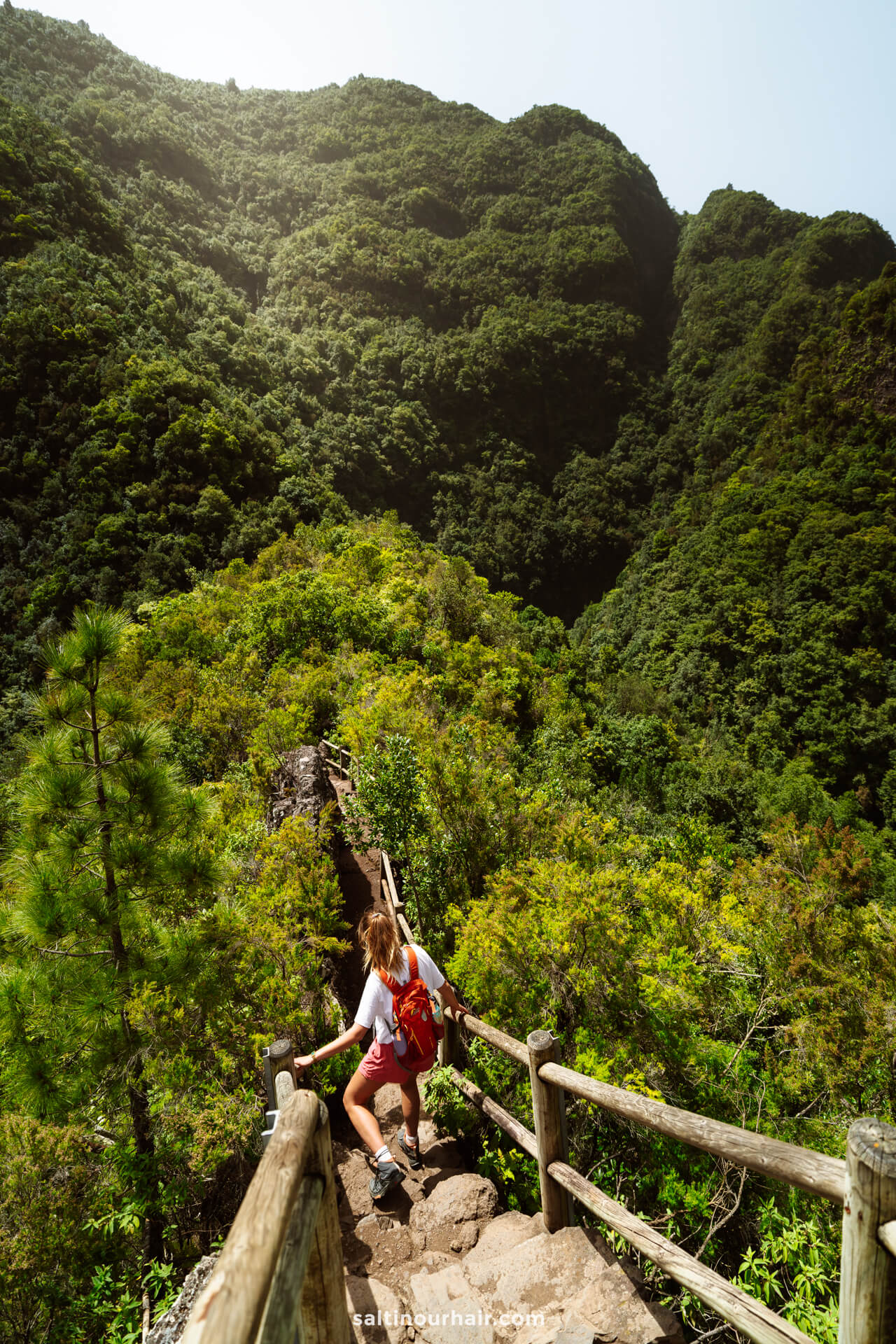
The trail starts from the same parking as Cascada de los Tilos, the island’s most famous waterfalls. It was closed when we visited because of landslides, so check this list before you go. If it’s open, the waterfall is just a short walk from the parking to a viewing platform and is easy to combine with the hike.
Good to know: Parking opens at 9 AM, so don’t plan to start earlier. Bring proper hiking shoes as it gets muddy, and the side paths are slippery on loose gravel.
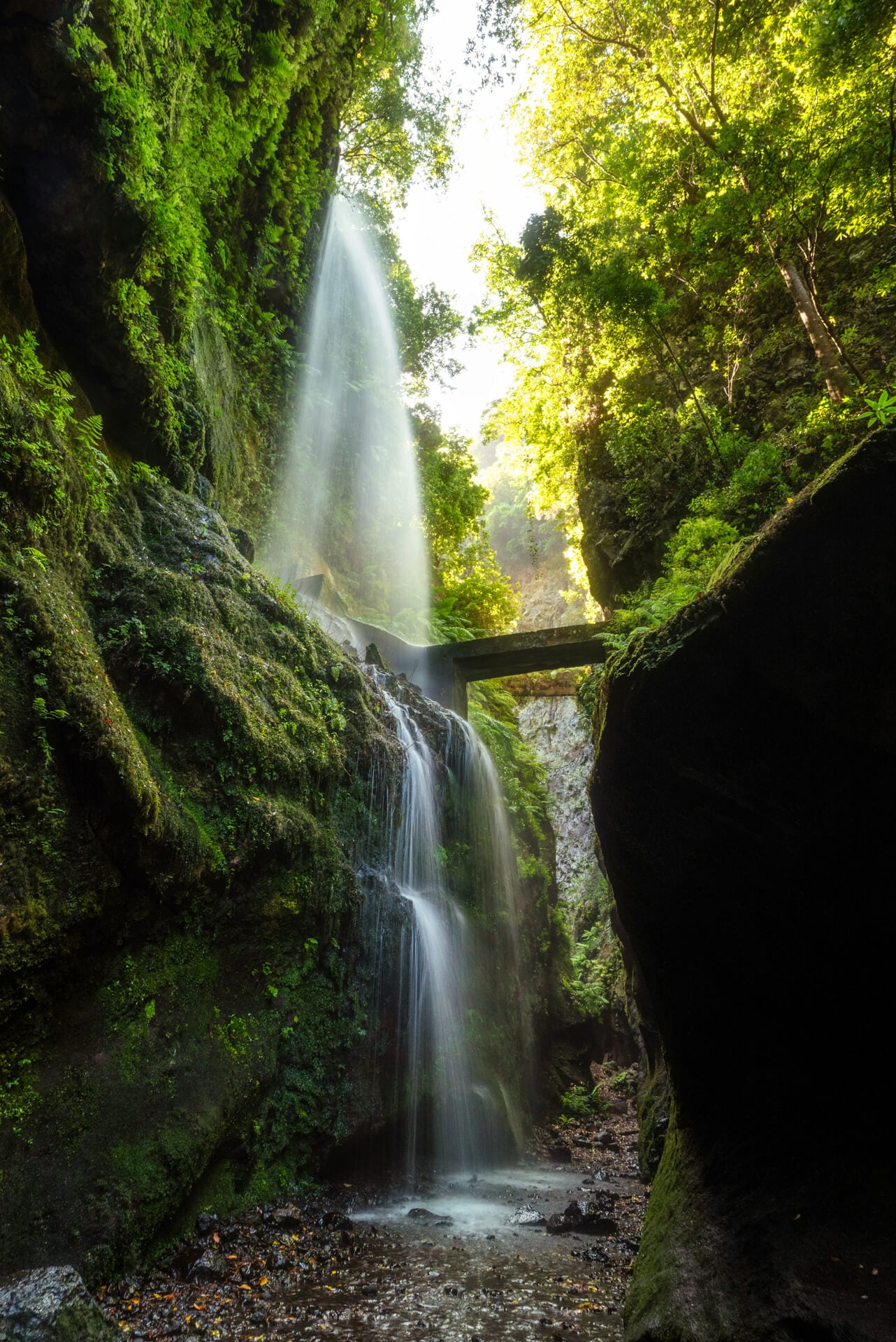
Piscinas de la Fajana (natural pools)
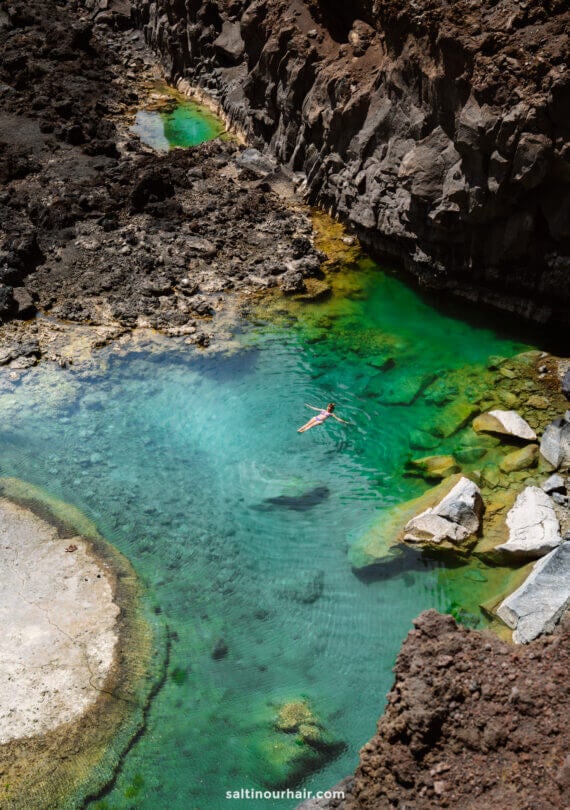
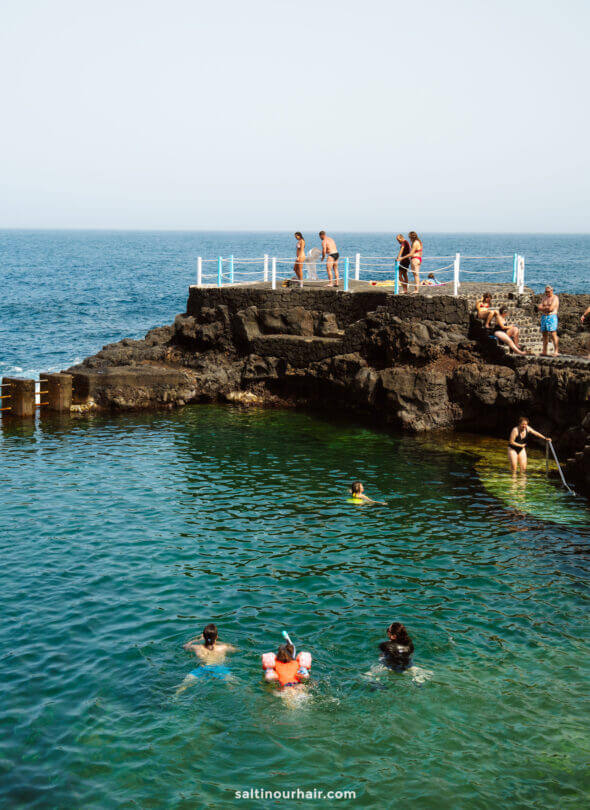
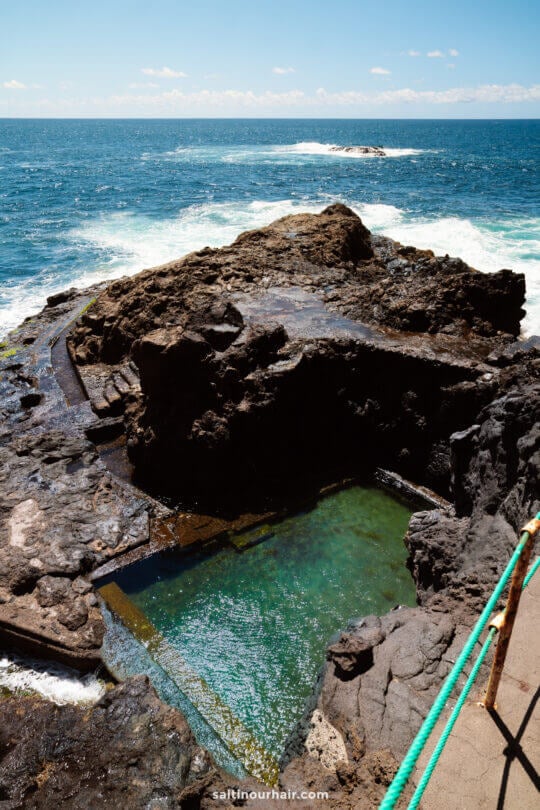
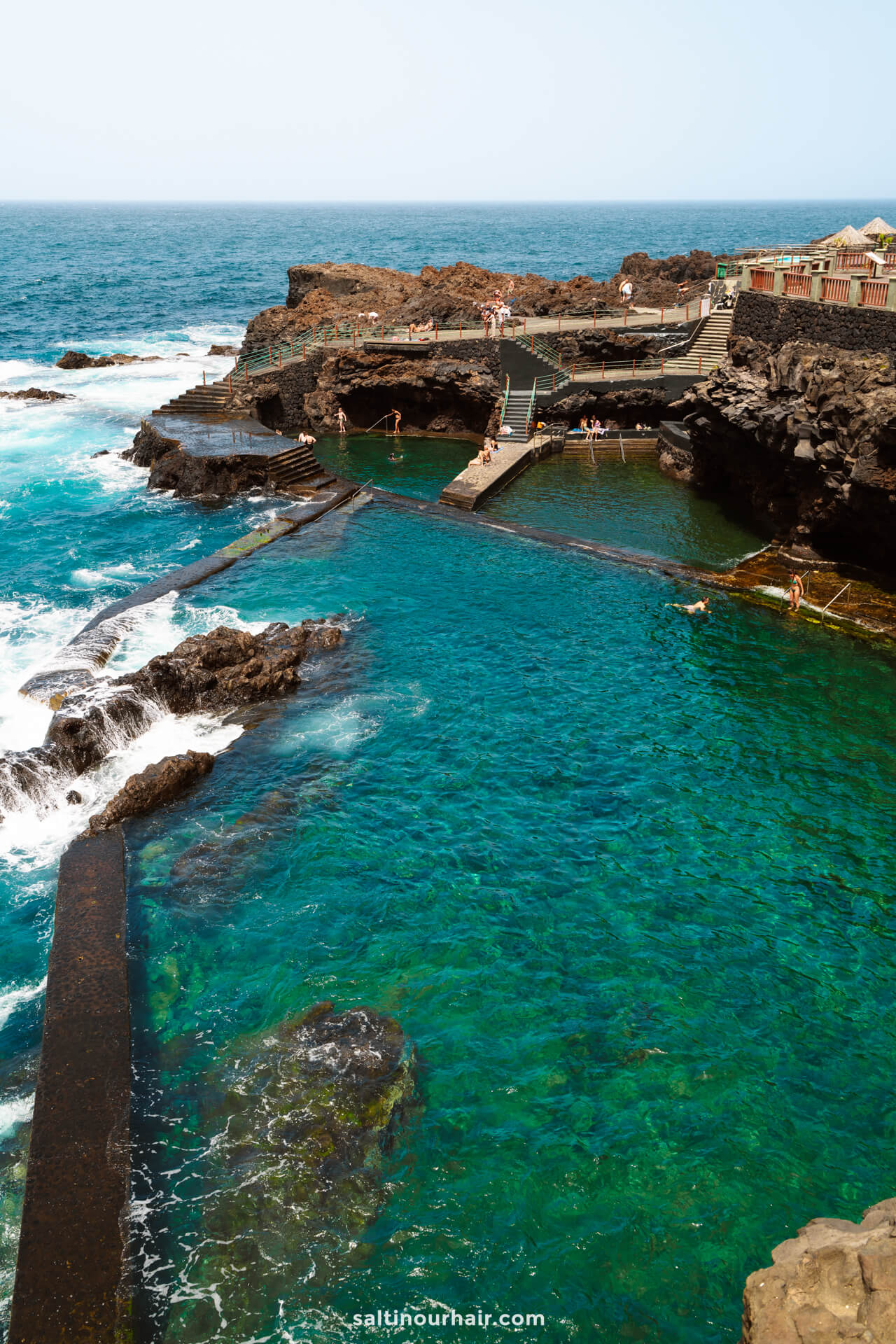
After the hike, drive 20 min to have a dip in the Piscinas de la Fajana. These natural pools are right by the sea, with volcanic rock walls keeping the water calmer. On a sunny, low-wind day, it’s one of the best swims on this side of the island.
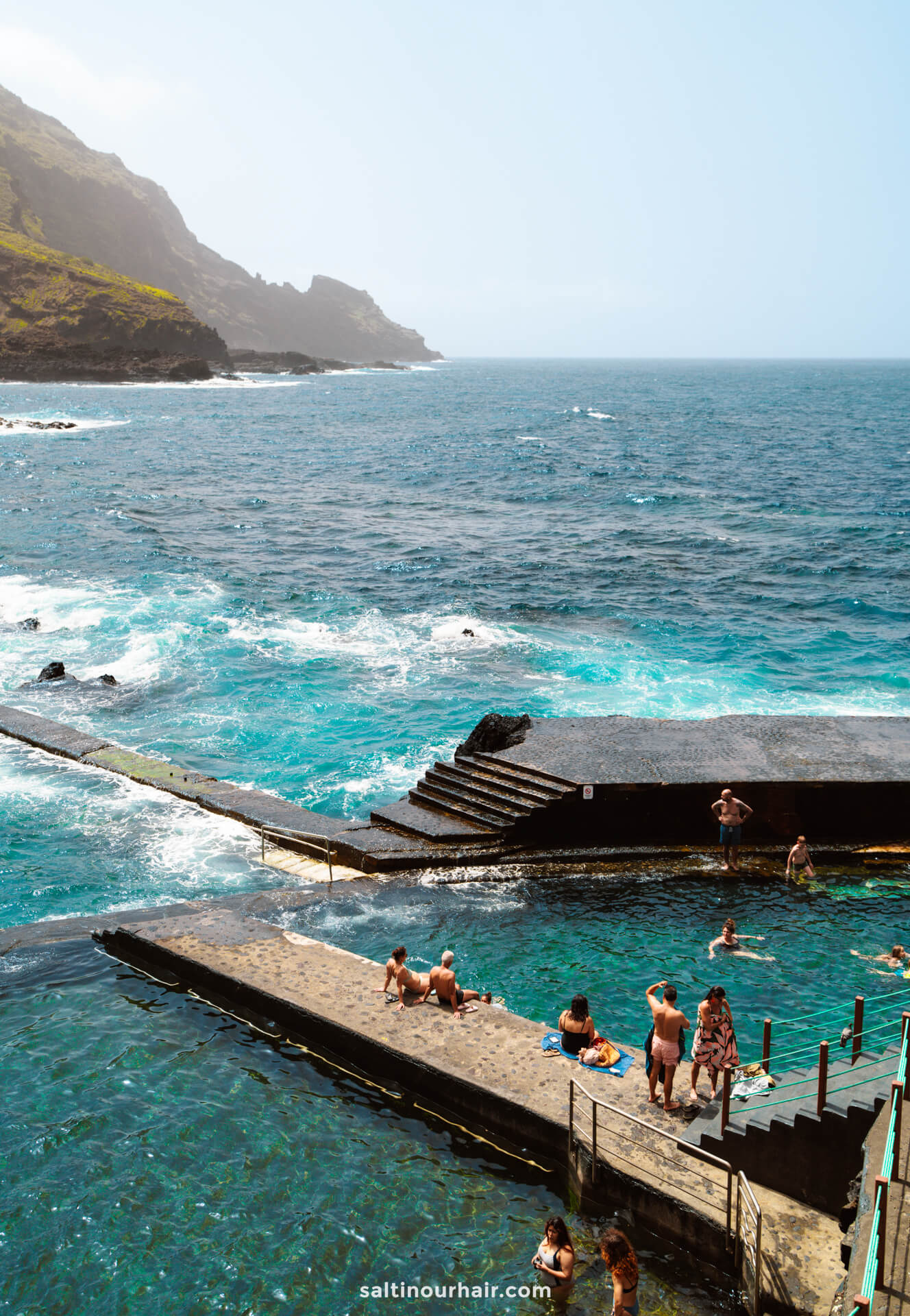
Tip: If you’re with young kids, El Charco Azul has shallower, more sheltered pools.
Coastal walk to San Andrés
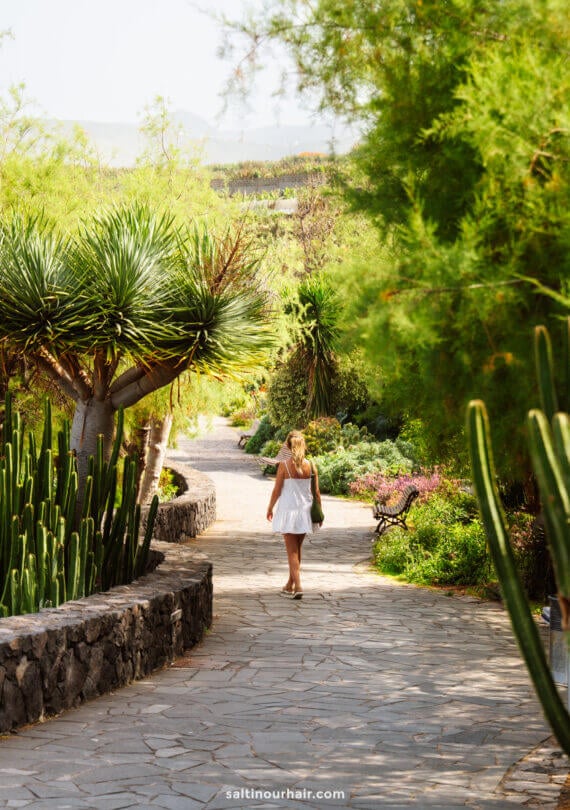
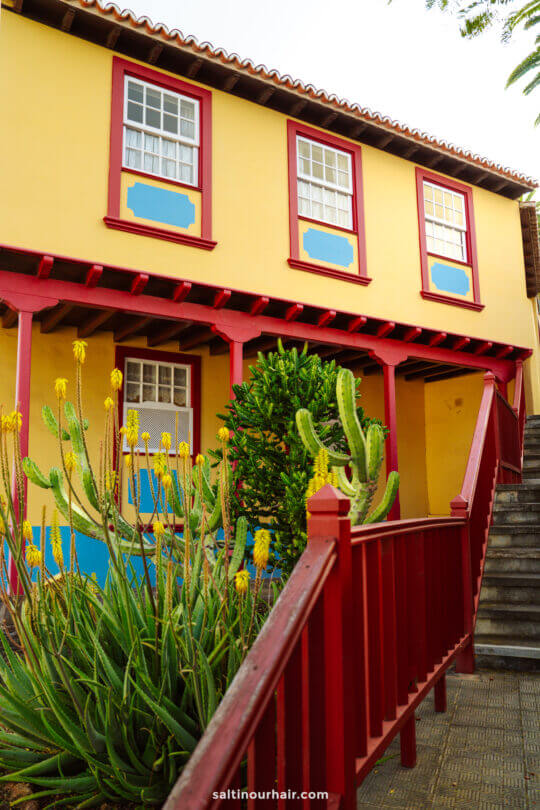
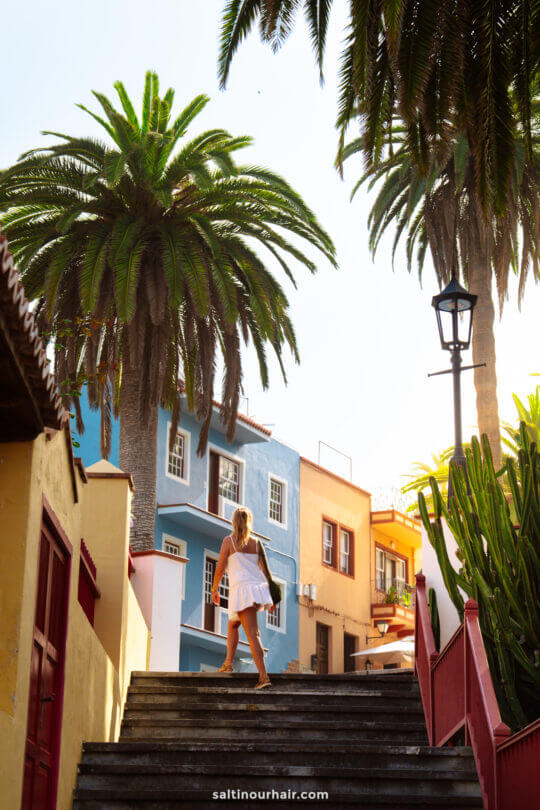
From El Charco Azul, you can take an easy 30-minute coastal walk to San Andrés, a small, colorful town and easily the most stunning one on the island.
Visit the best Beaches in La Palma
Playa de Nogales (sunrise)
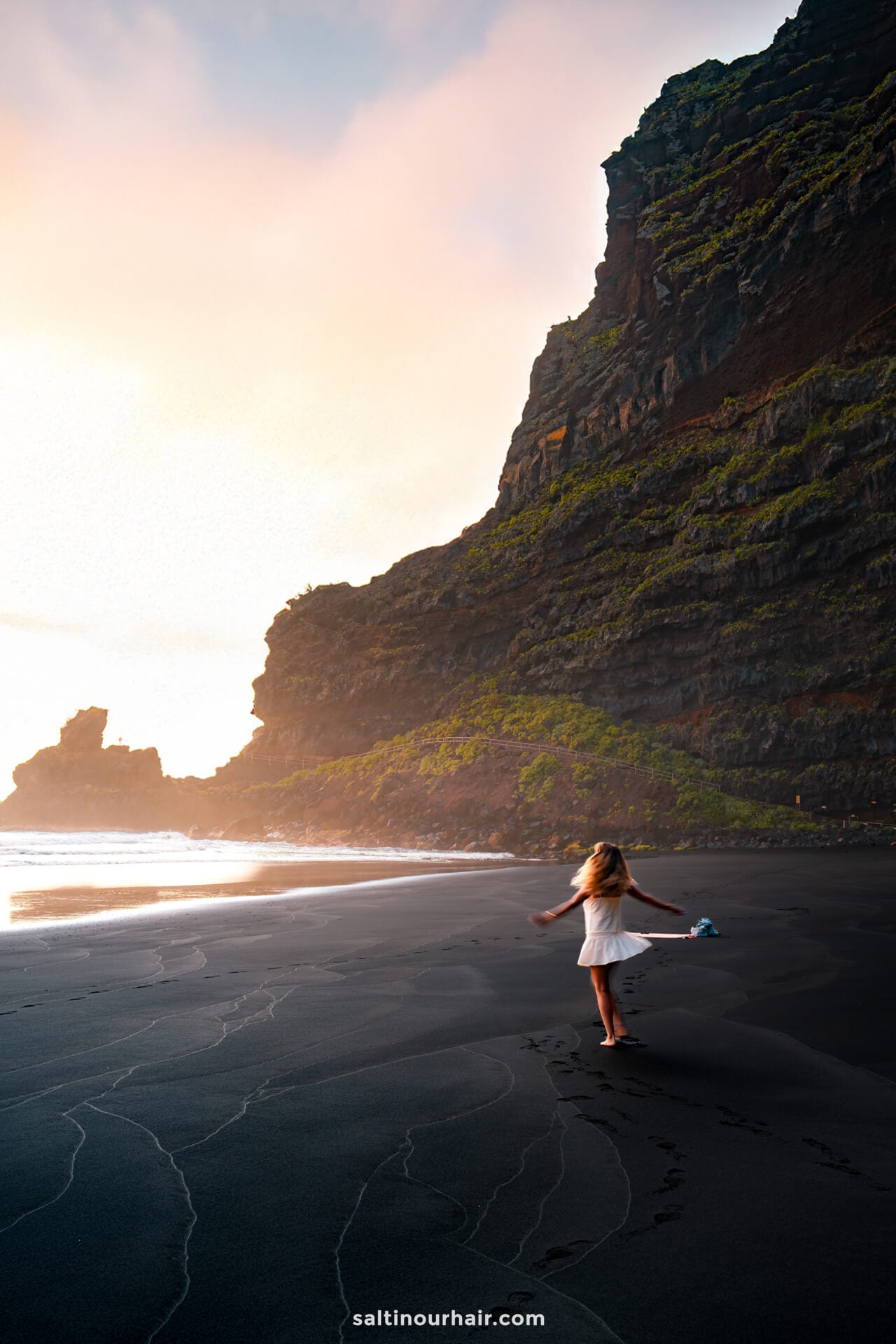
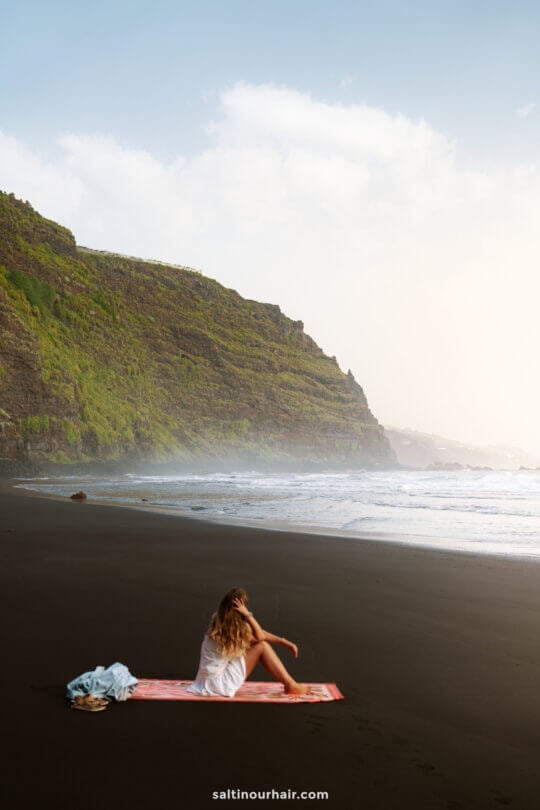
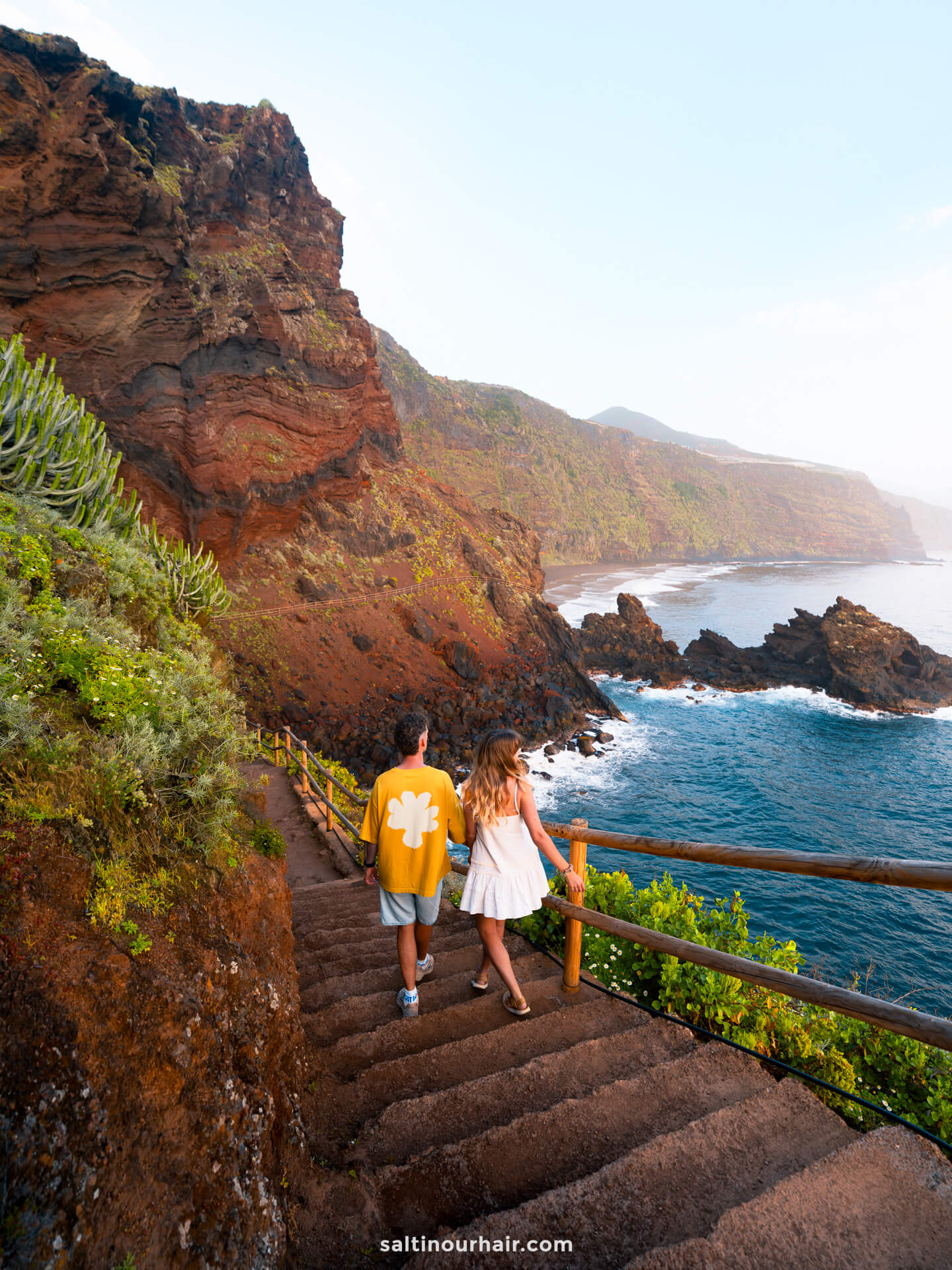
The most scenic beach on La Palma, and the only place we’d genuinely tell you to set an alarm for. About 20 minutes from Santa Cruz, it’s a deep black-sand beach surrounded by towering cliff walls. It is a famous beach with surfers, who are also the legends that make sure it stays clean.
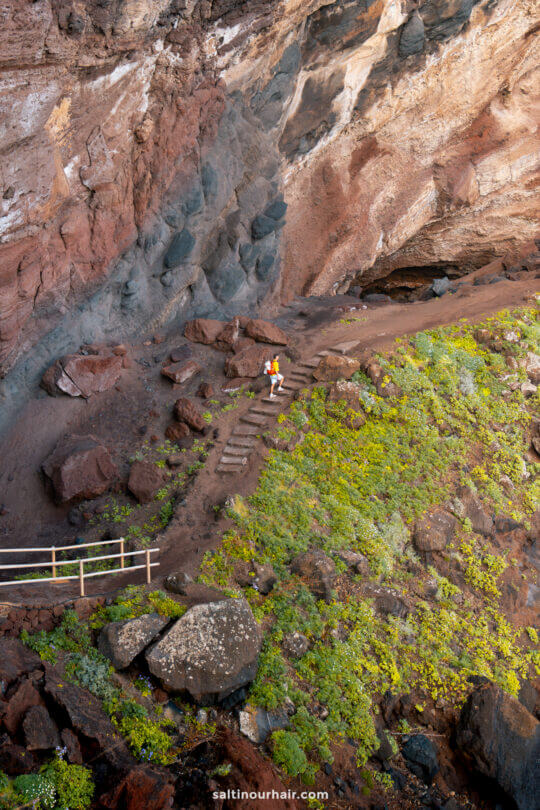
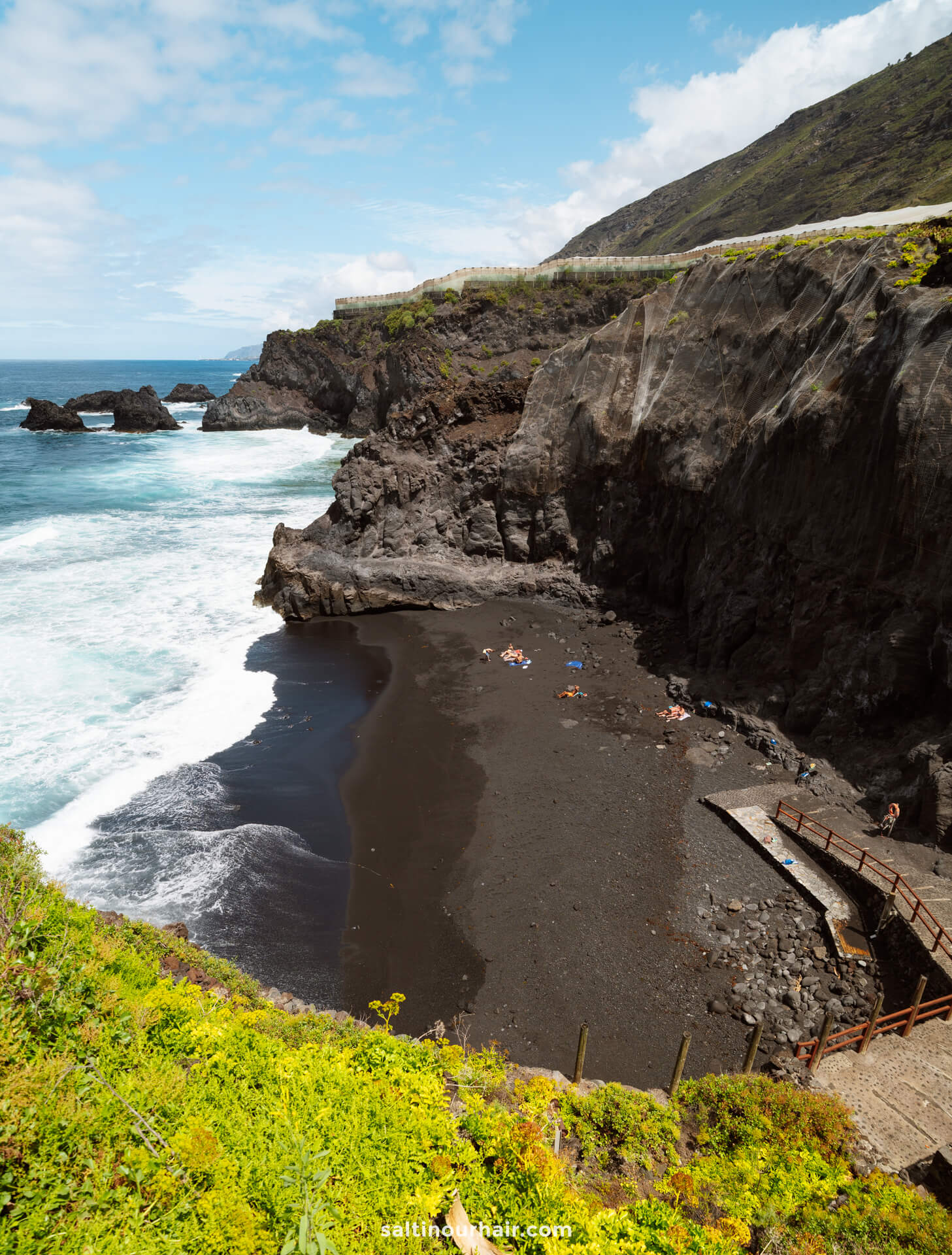
If you’d rather skip the beach and just swim, there’s a separate access point at the end of the parking lot with a ladder into the sea.
See La Palma’s highlights in one day with this tour.
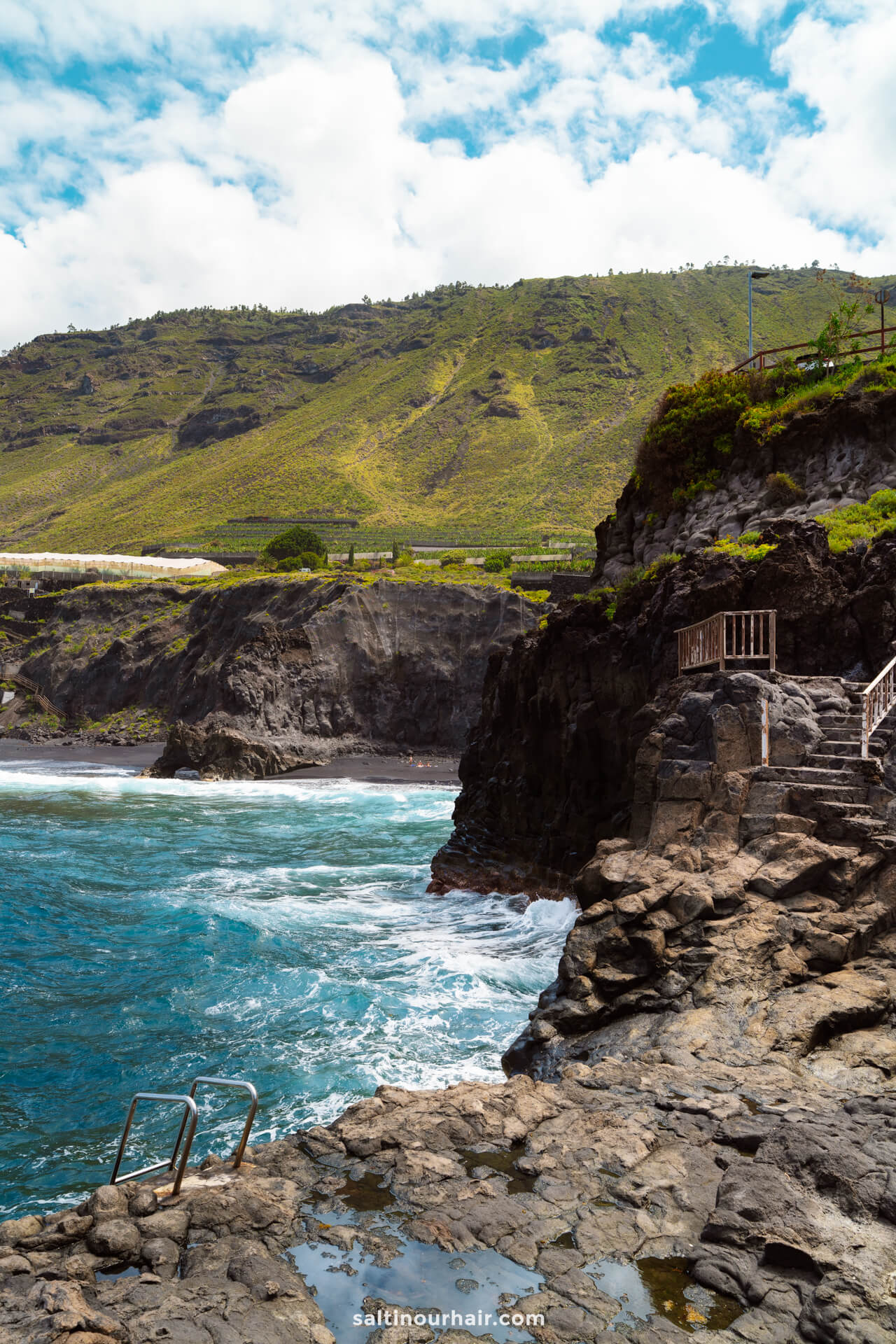
Pozas Naturales de Achentive
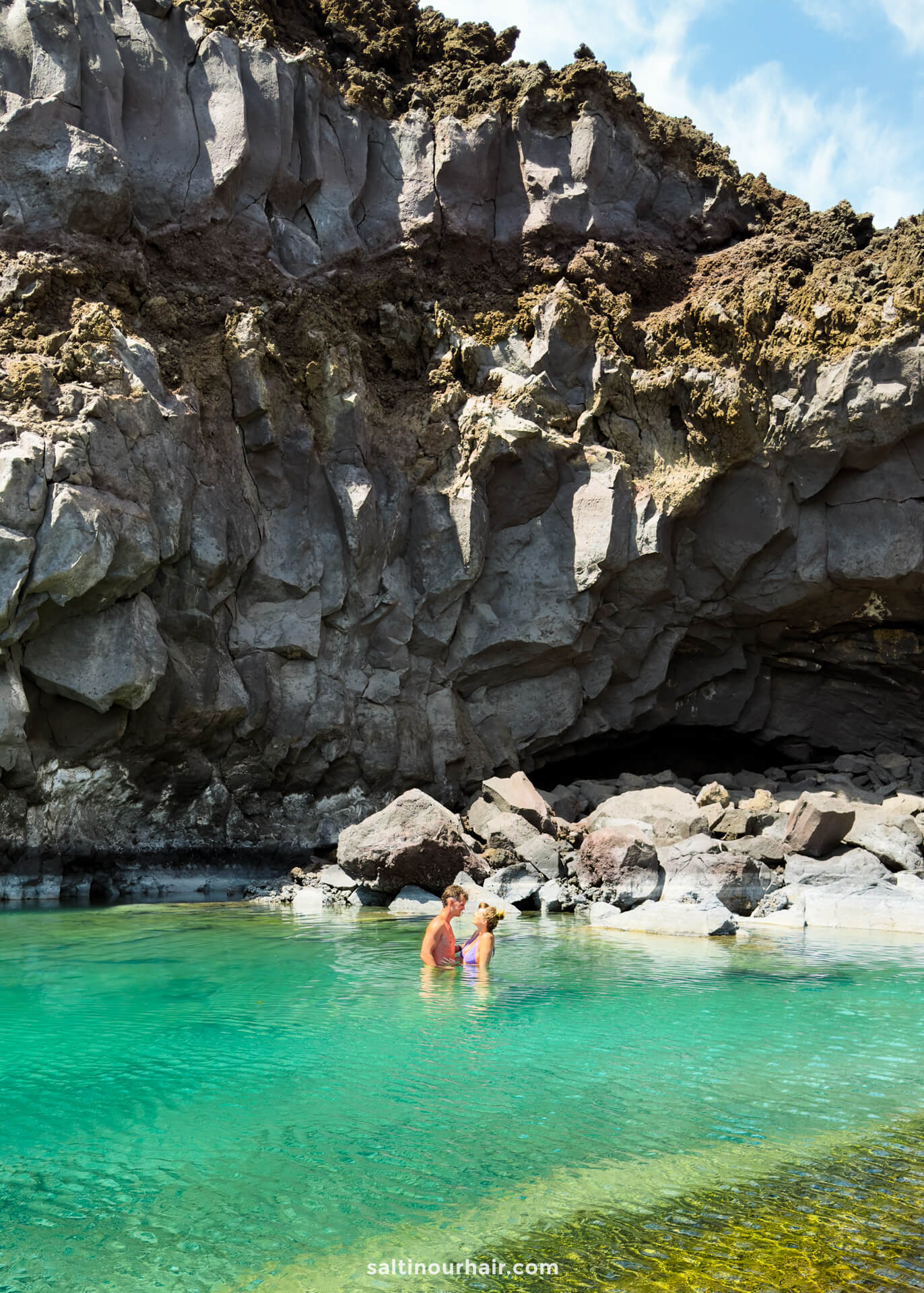
Walk down to Playa de Achentive and instead of heading for the sea, follow the rock wall to the right side, that’s where you’ll find the Pozas Naturales. A natural pool tucked behind volcanic rock, with insanely blue water when the sun hits it. Much warmer than the sea because the sun beams on it all day.
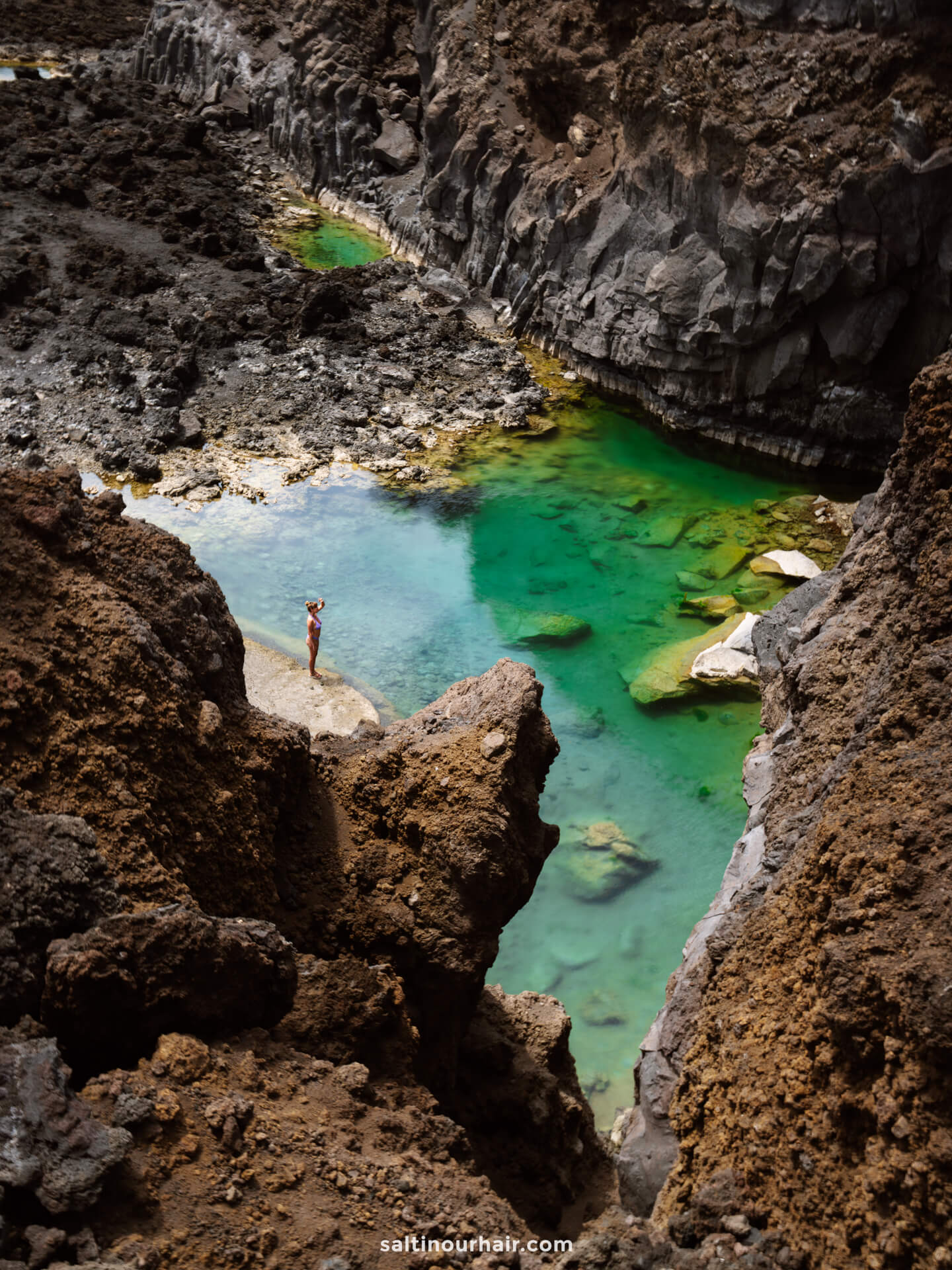
This place was empty when we went because most people don’t seem to know about this corner of the beach.
Note: The pool fills with the tide. Water comes through the rocks and rises quite fast at high tide – it almost took our camera bags, haha. So, put your stuff up high or hang it on the rocks behind you.
Los Llanos de Aridane
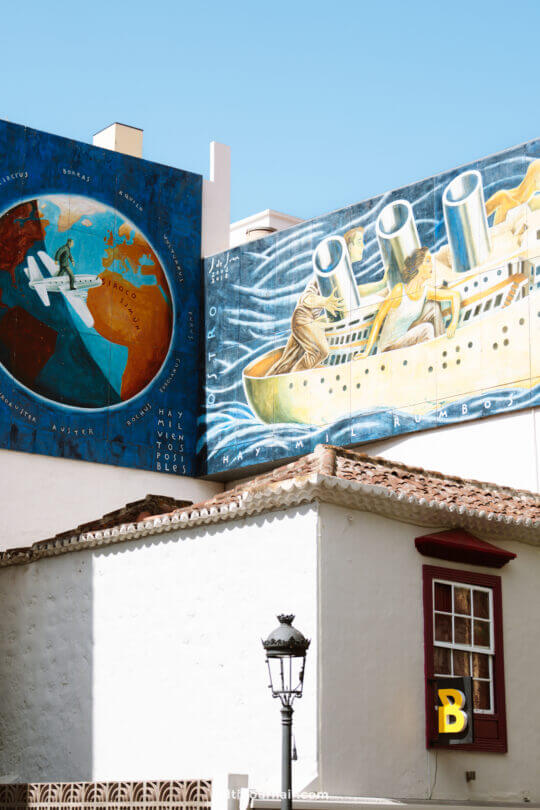
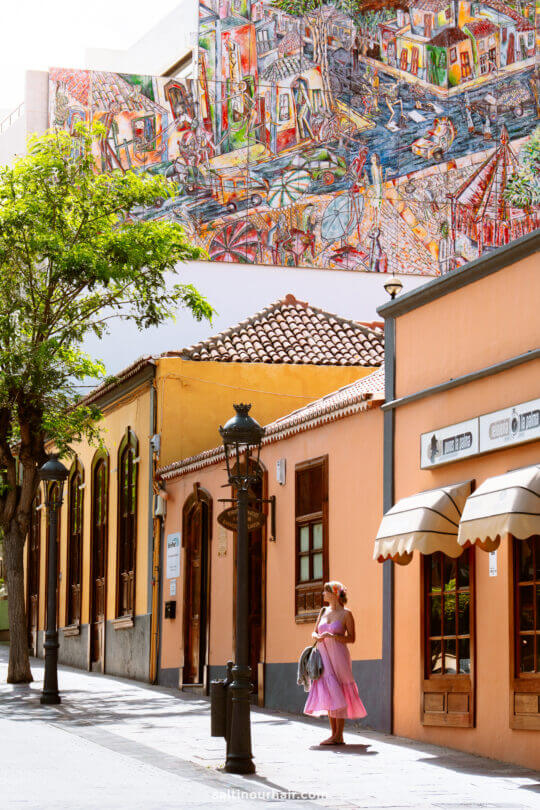
Los Llanos is the bigger, sunnier town on the west side, and where we based ourselves for the second half of our La Palma trip. The old center is small, walkable, full of colonial buildings (that reminded us of Bogota in Colombia). And to our surprise, it has some great street art. Big, properly done pieces, mixed with the colonial architecture.
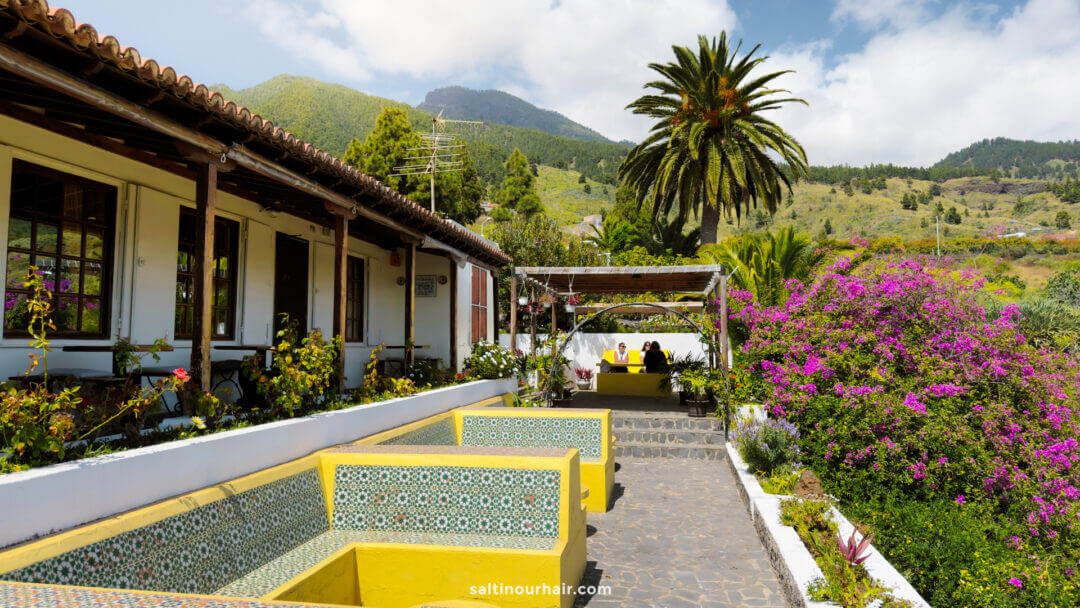
We stayed at Lauser Suites, one minute outside the old center. It didn’t have many reviews when we booked, but it turned out modern, spotless, and good value.
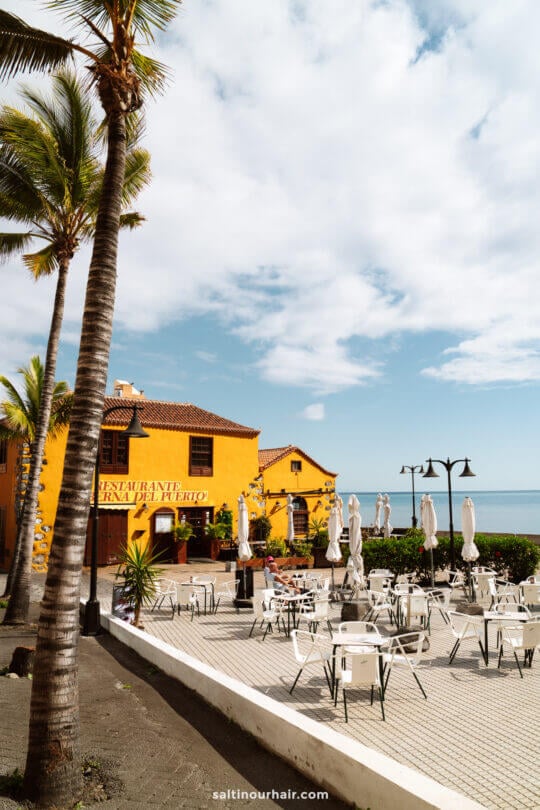
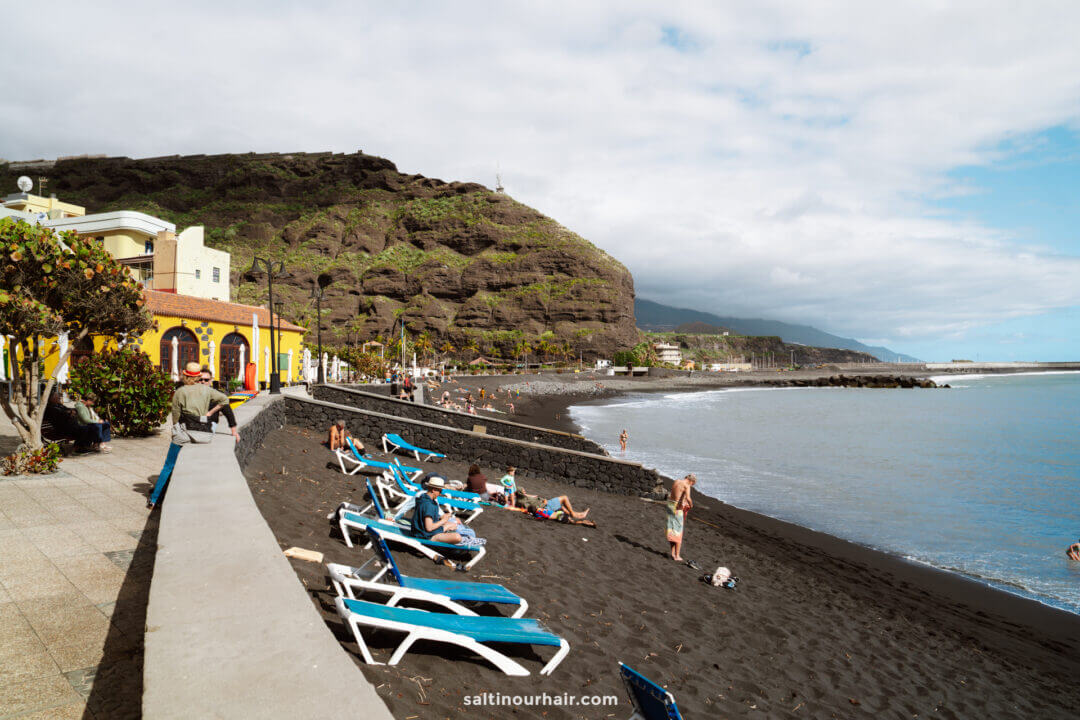
There’s also a beach with a promenade just a short drive away, named Playa de Tazacorte. This is a good spot to spend an afternoon on the terrace or beach and enjoy the sunset.
The volcanic eruption
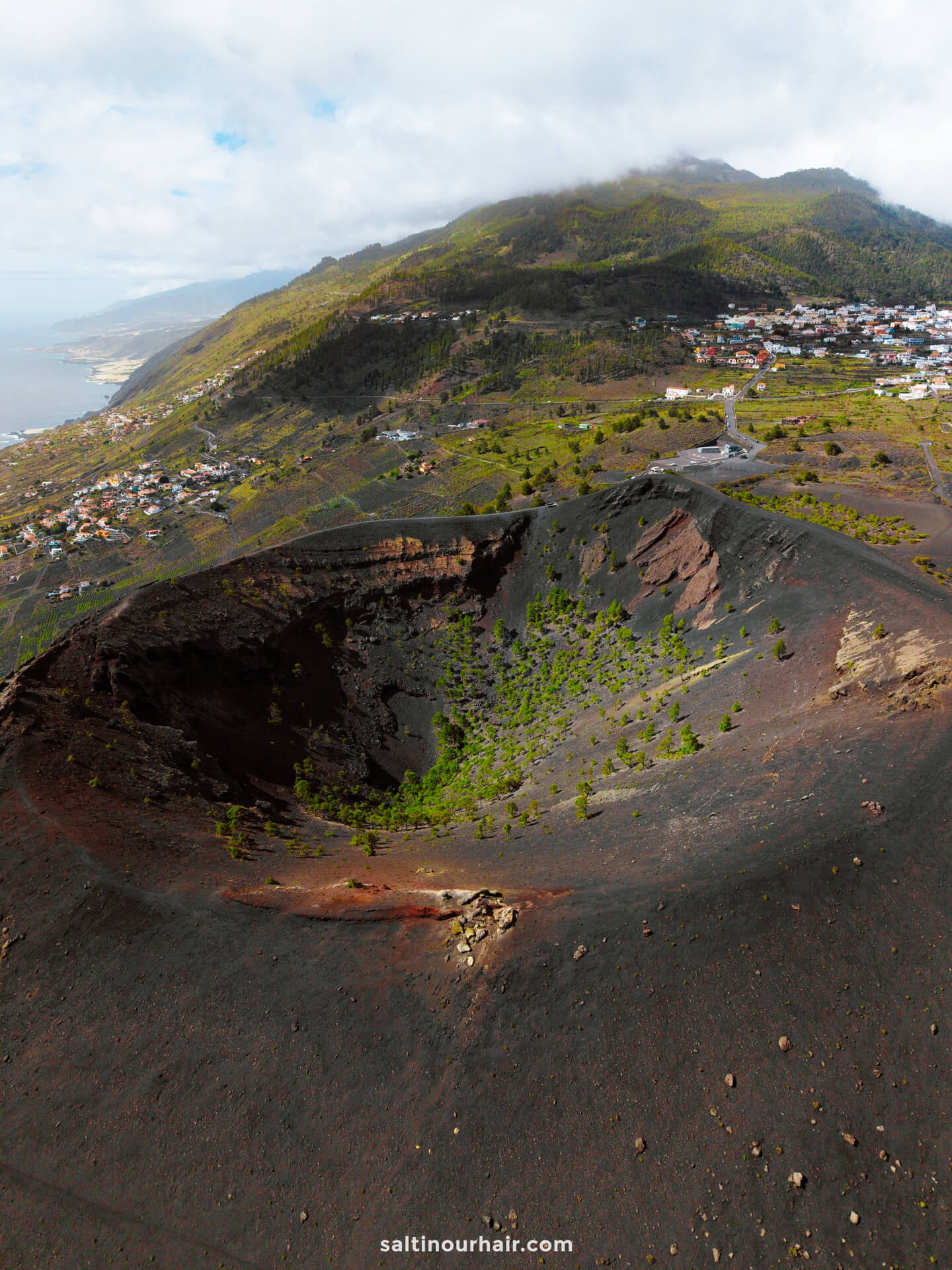
The Tajogaite volcano erupted in 2021, close to Los Llanos, and you can still see its impact. A massive slope of black volcanic sand runs from the new crater down to the ocean (you can actually take a tour along the crater).
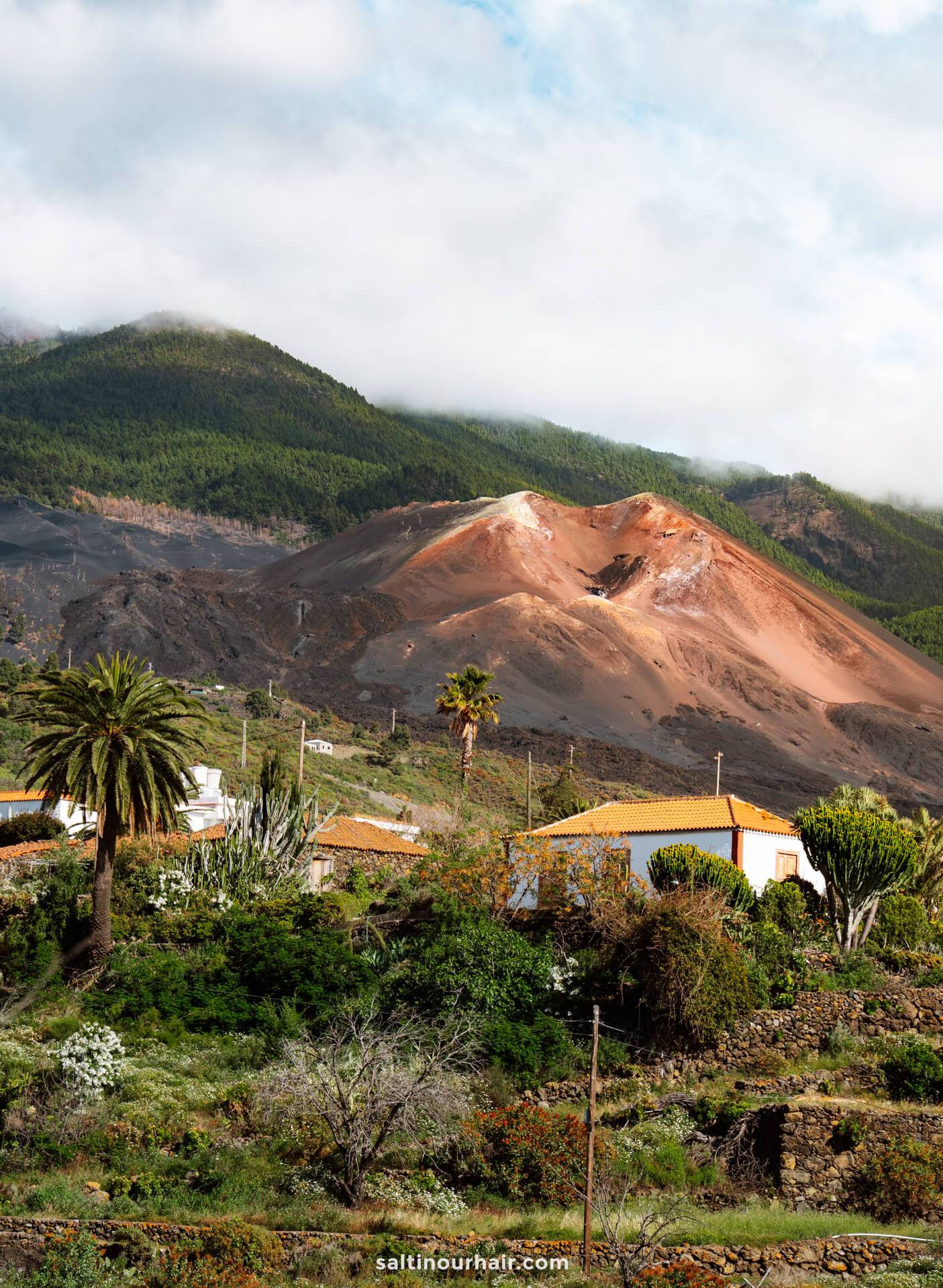
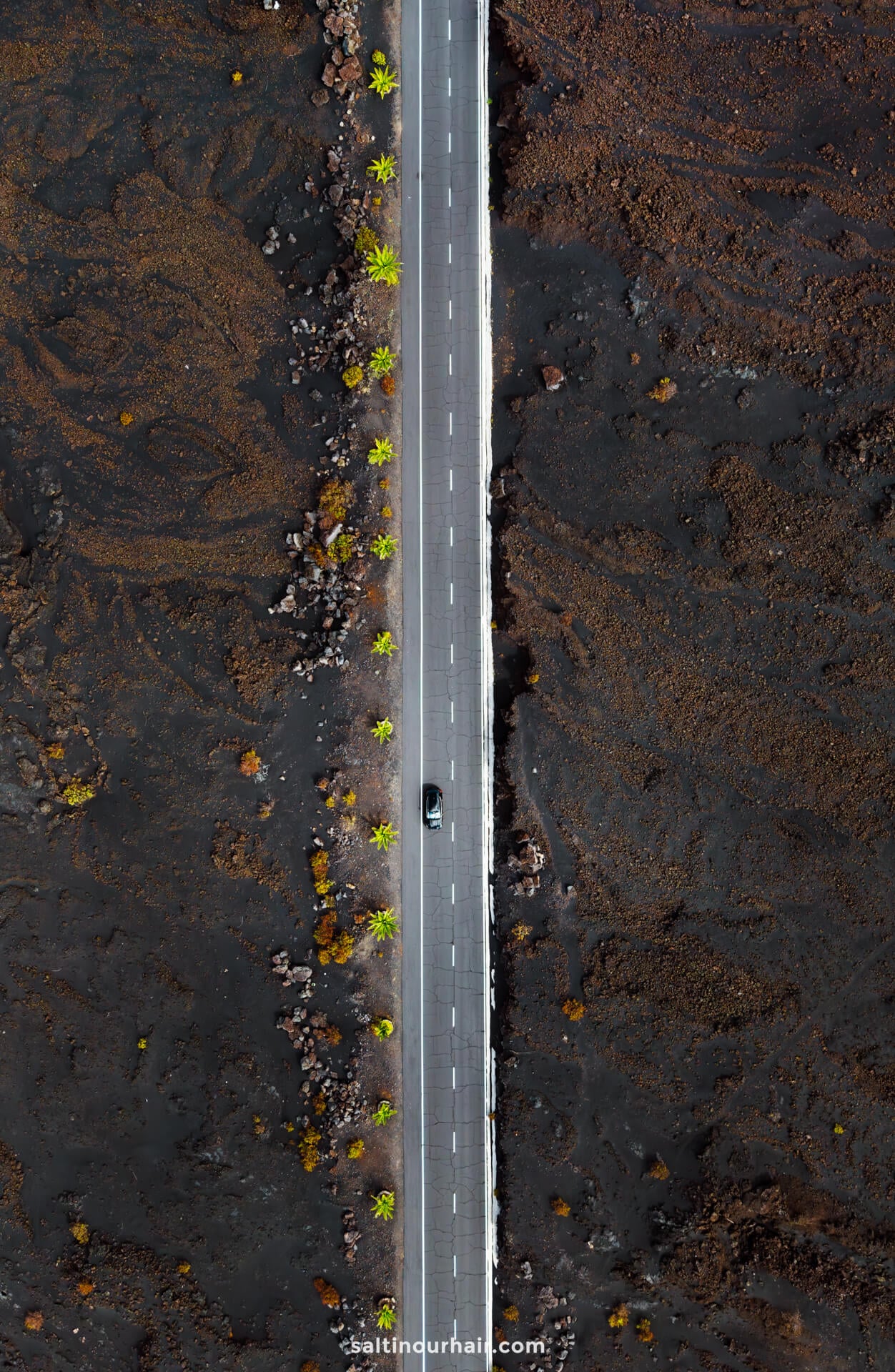
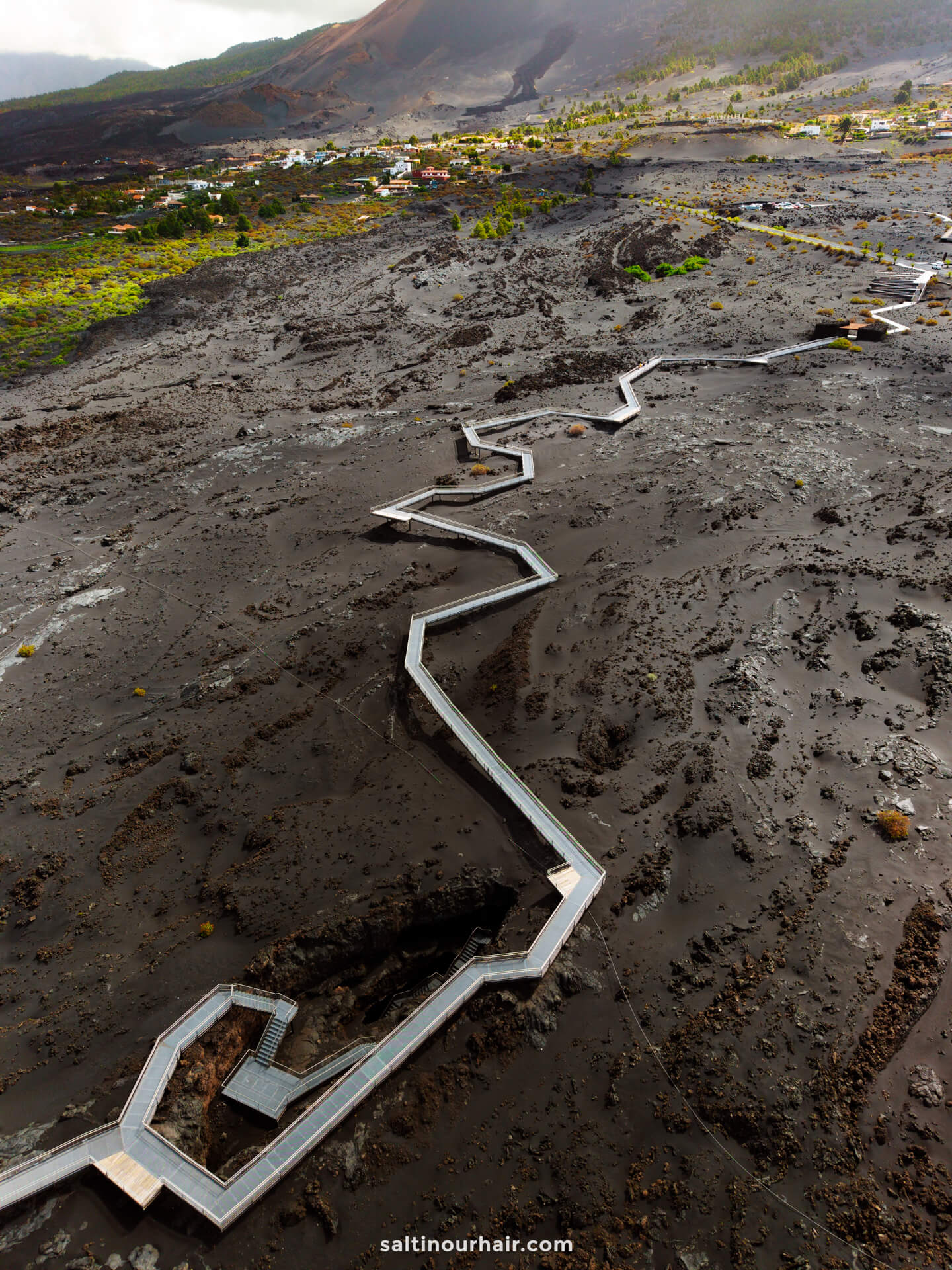
The best place to learn more is Centro de Interpretación Cañones de Fuego, with a nice boardwalk built on the new lava field and a tour through to the tunnels. Or the Centro de Visitantes Volcán San Antonio, further south, covers the older volcano on that side.
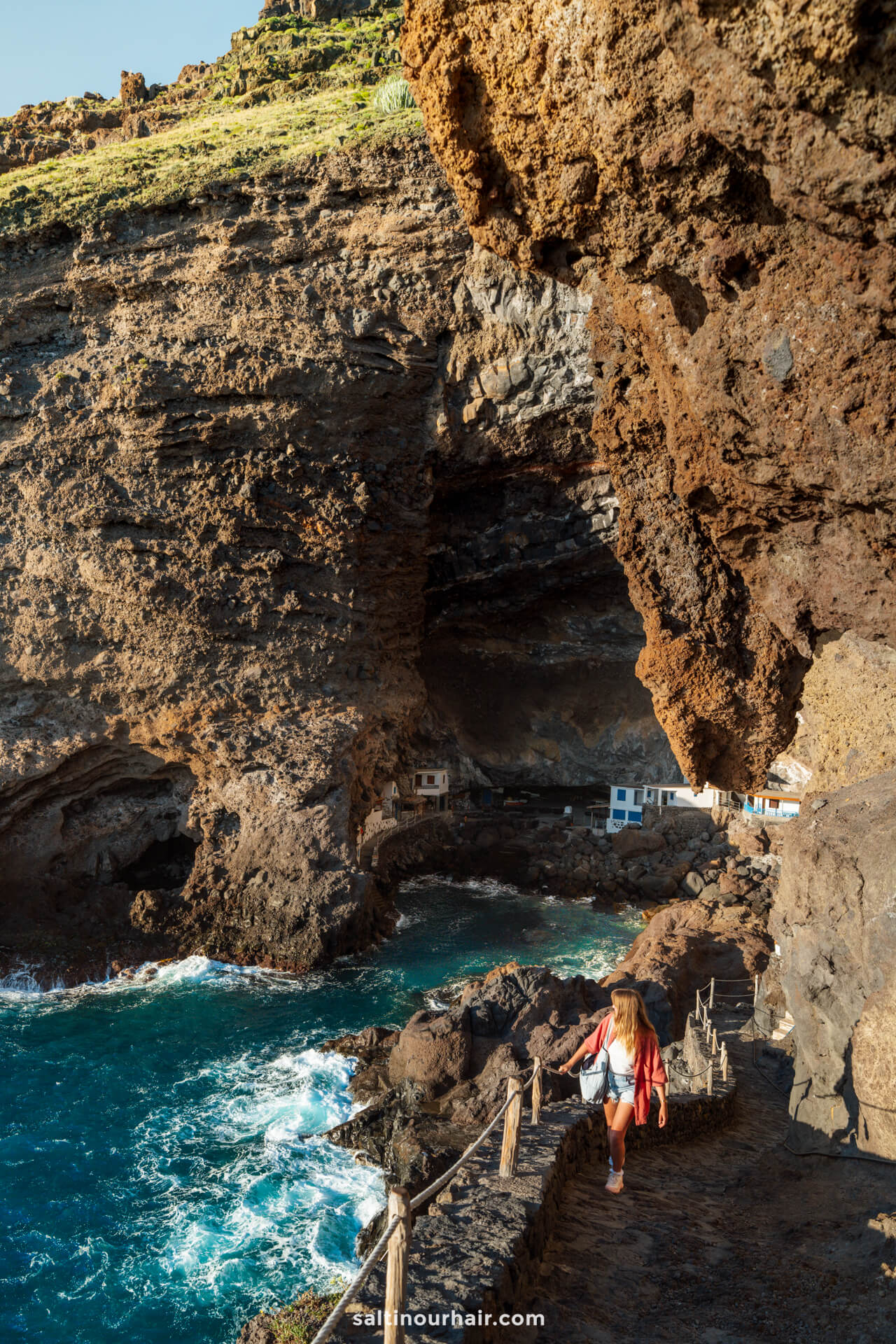
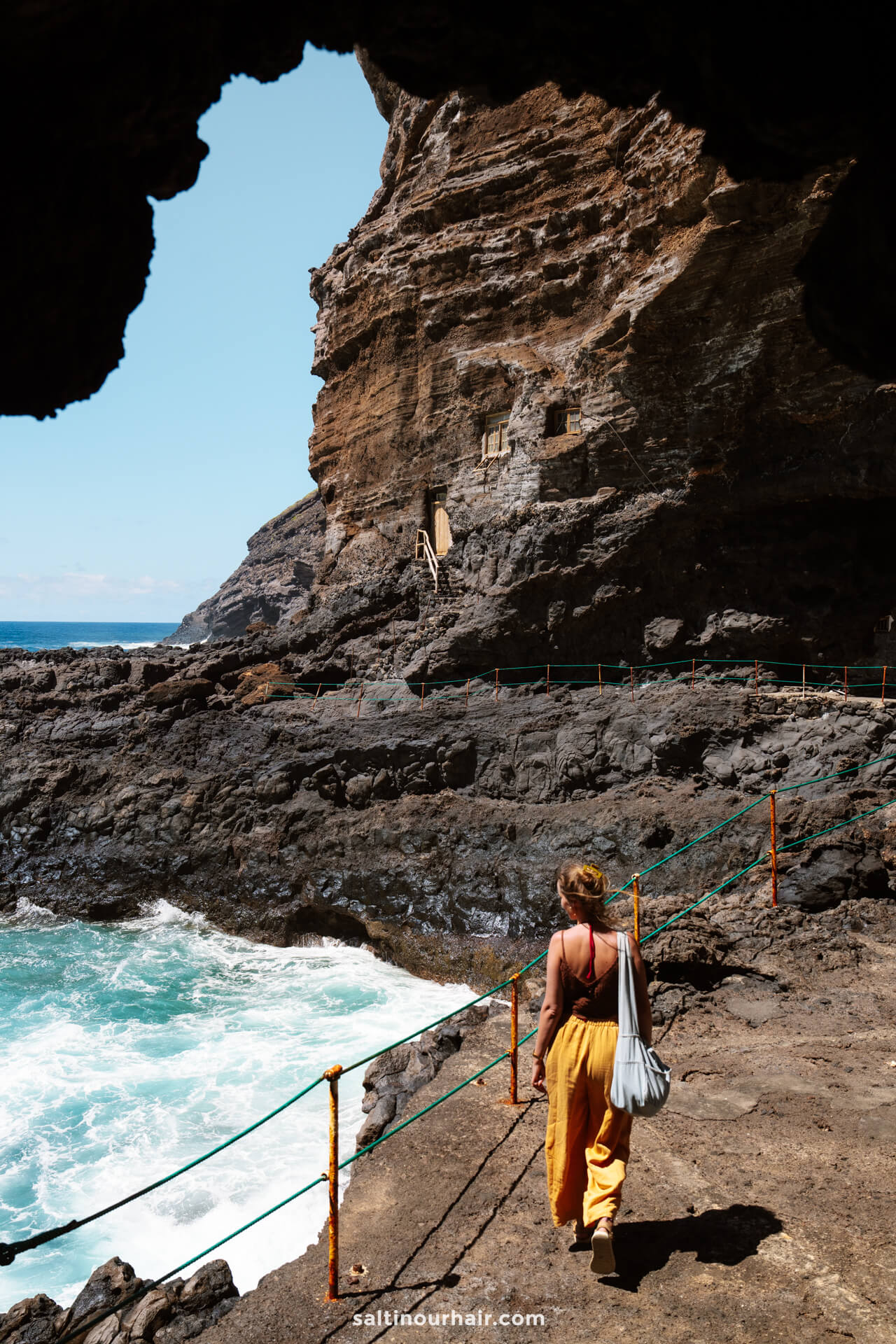
From around 2 PM (in April), the sun drops into the cave, the houses light up, and the whole thing feels surreal.
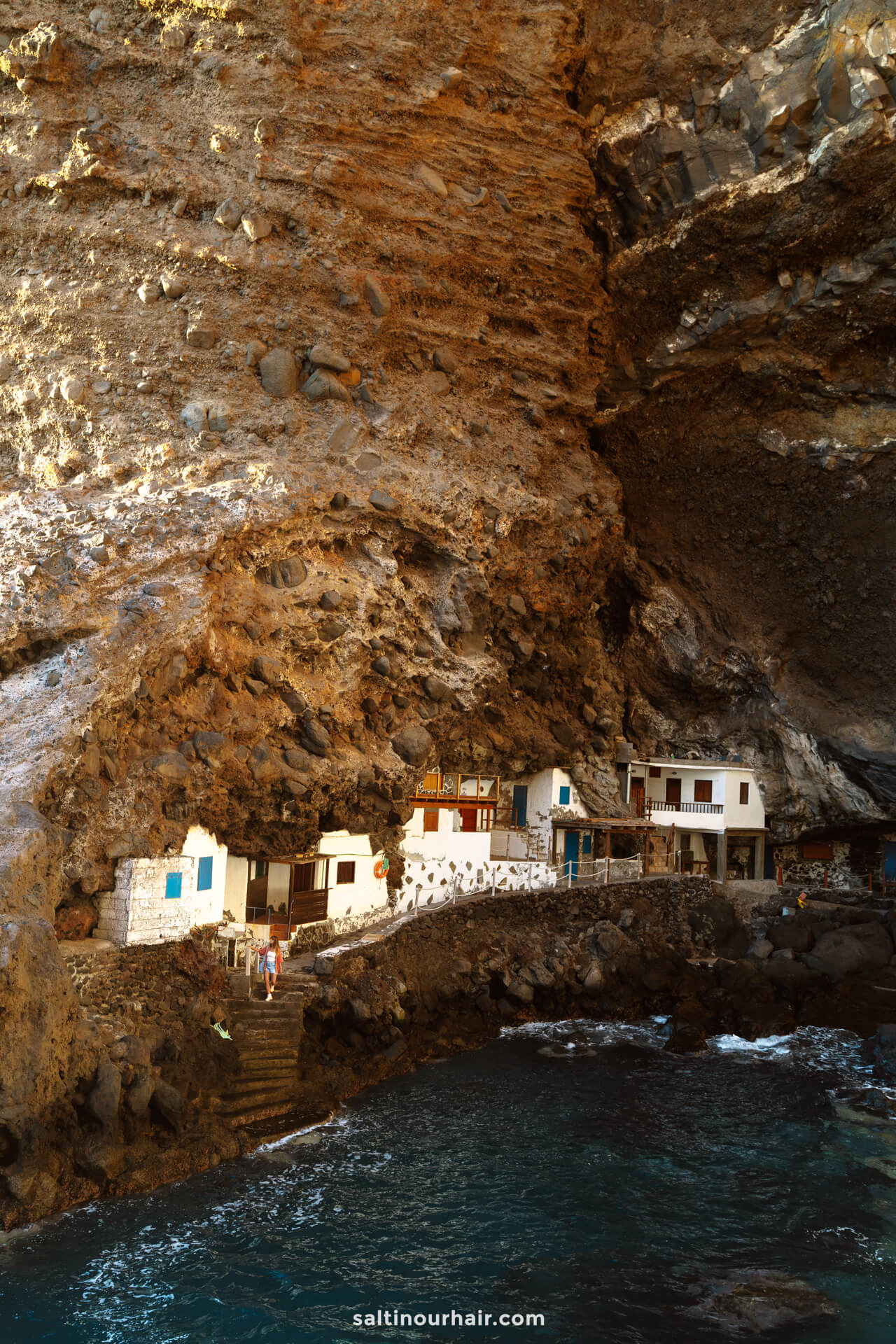
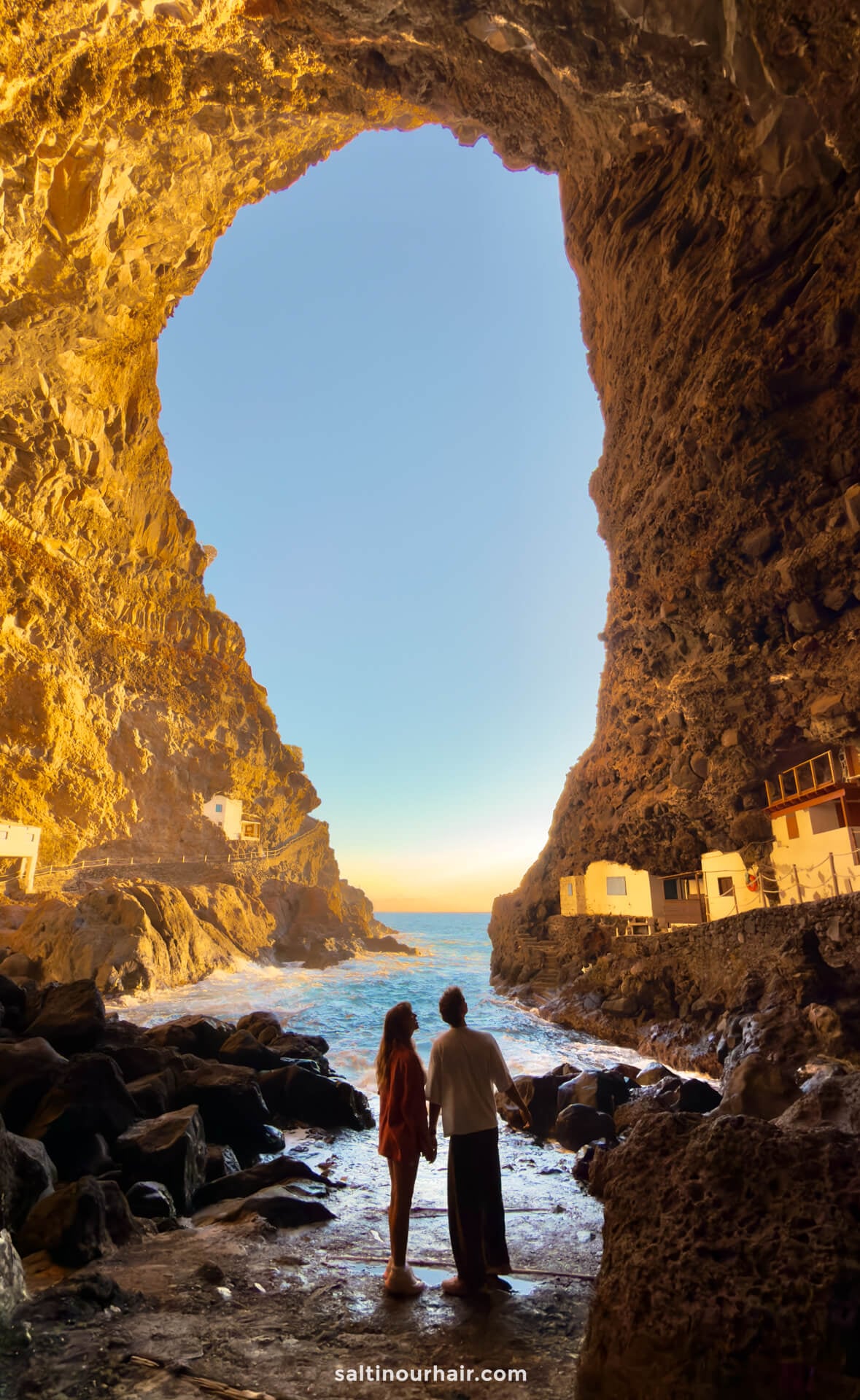
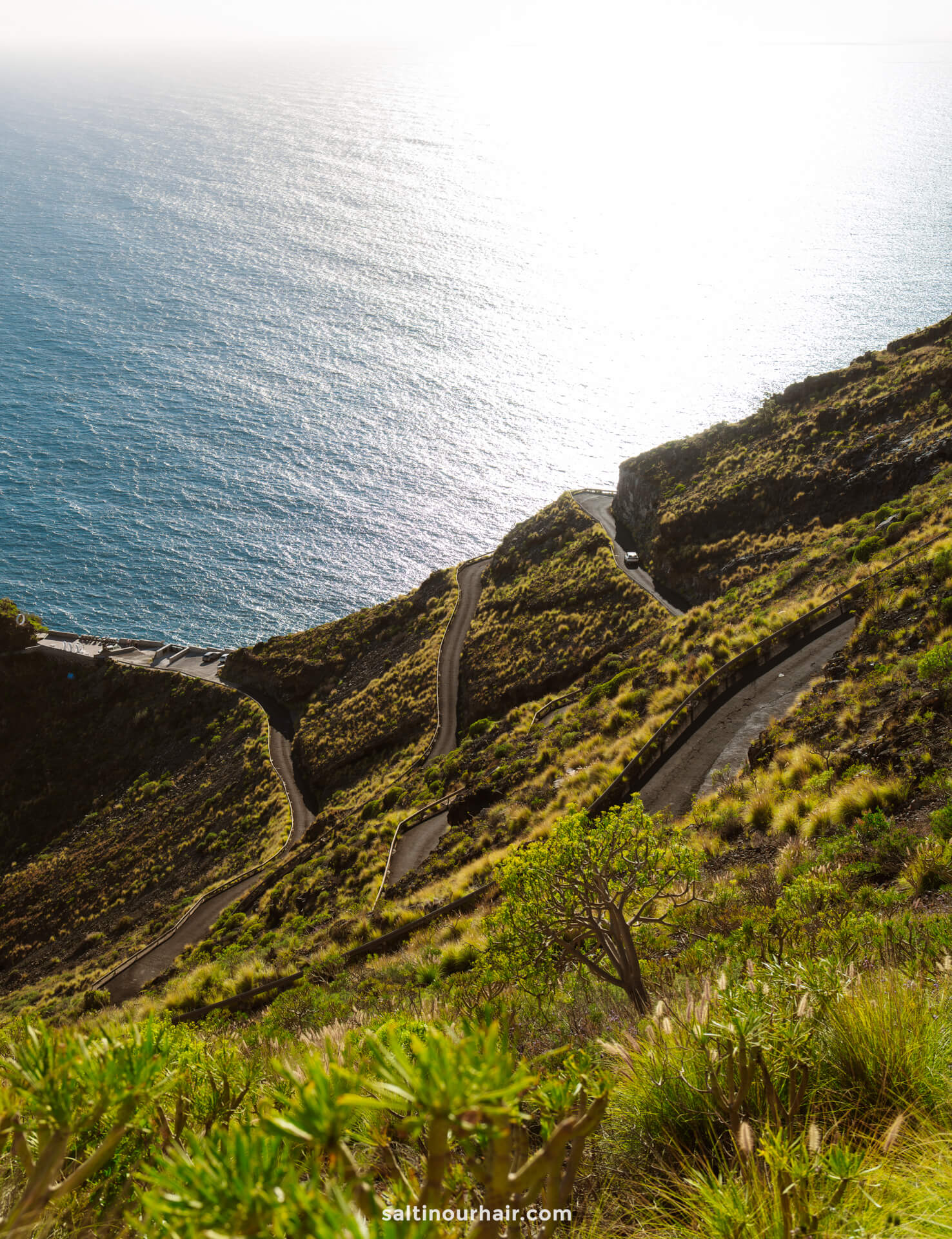
The road in is no joke… Narrow, extremely steep, and we couldn’t imagine passing another car coming up. We’re experienced drivers, have traveled a lot(!), and it still made us nervous. We arrived at sunset, when nobody was driving up, which was our luck. If you’re not comfortable on tight mountain roads, take a taxi or book a tour.
Please note that the houses are private, so respect the no-entry signs.
Puerto de Puntagorda
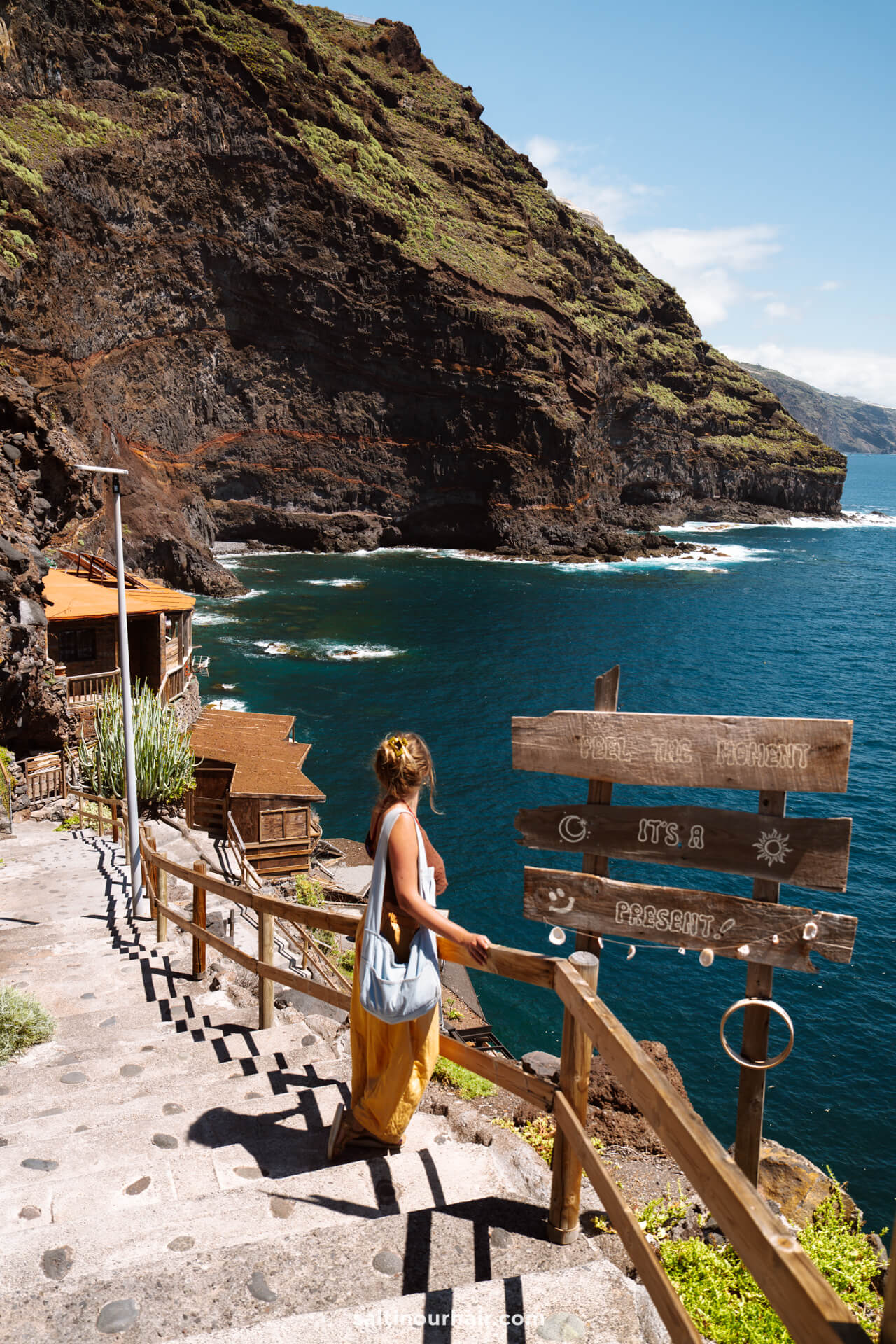
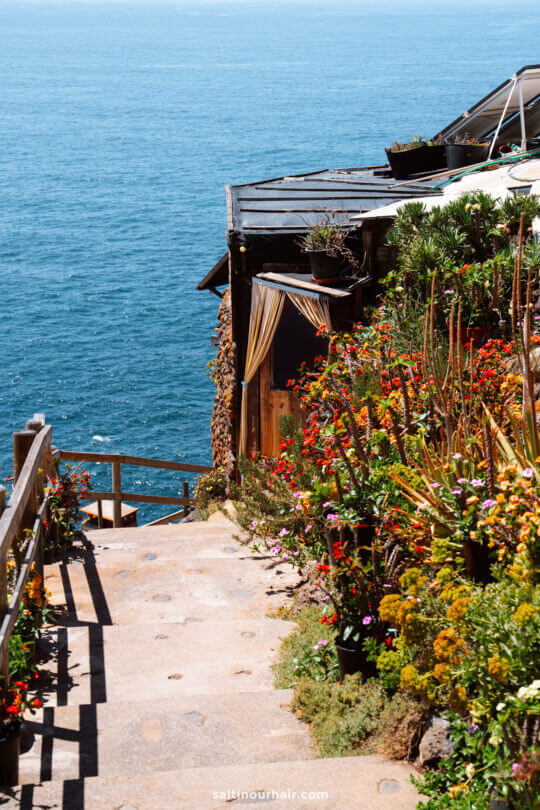
If that road to Porís de Candelaria is a no for you, drive northwest to Puerto de Puntagorda. Another tiny village built along steep cliffs at the water, with the same dramatic setting but a much more manageable road towards it.
Mirador de la Cumbrecita
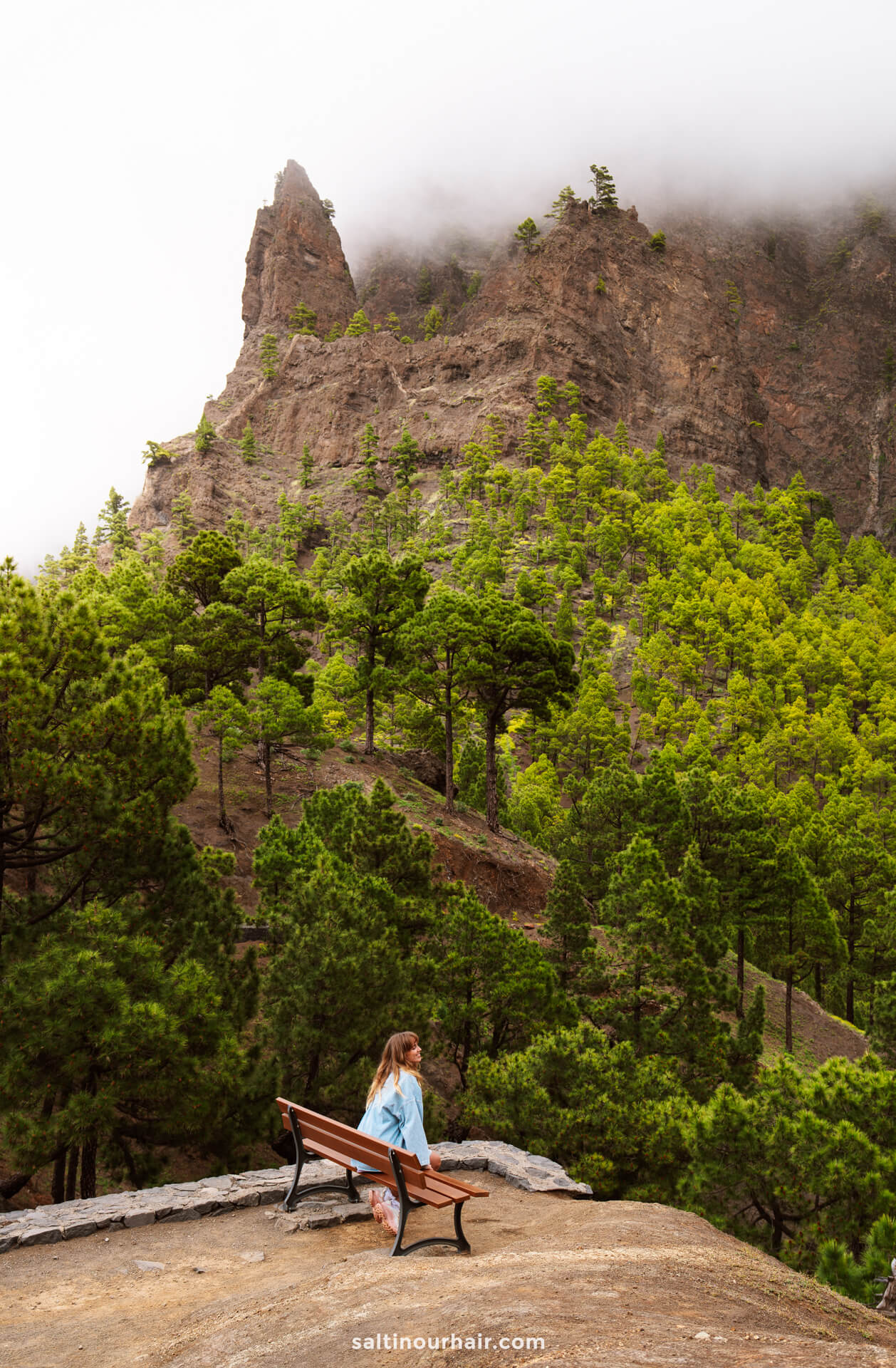
A 30-minute drive from Los Llanos into the middle of the island brings you to one of La Palma’s most popular viewpoints, on the rim of a massive volcanic crater surrounded by orange rock and forest.
Reservations are required for parking between 9 AM and 4 PM because it is small at the top. Outside those hours, no booking is needed.
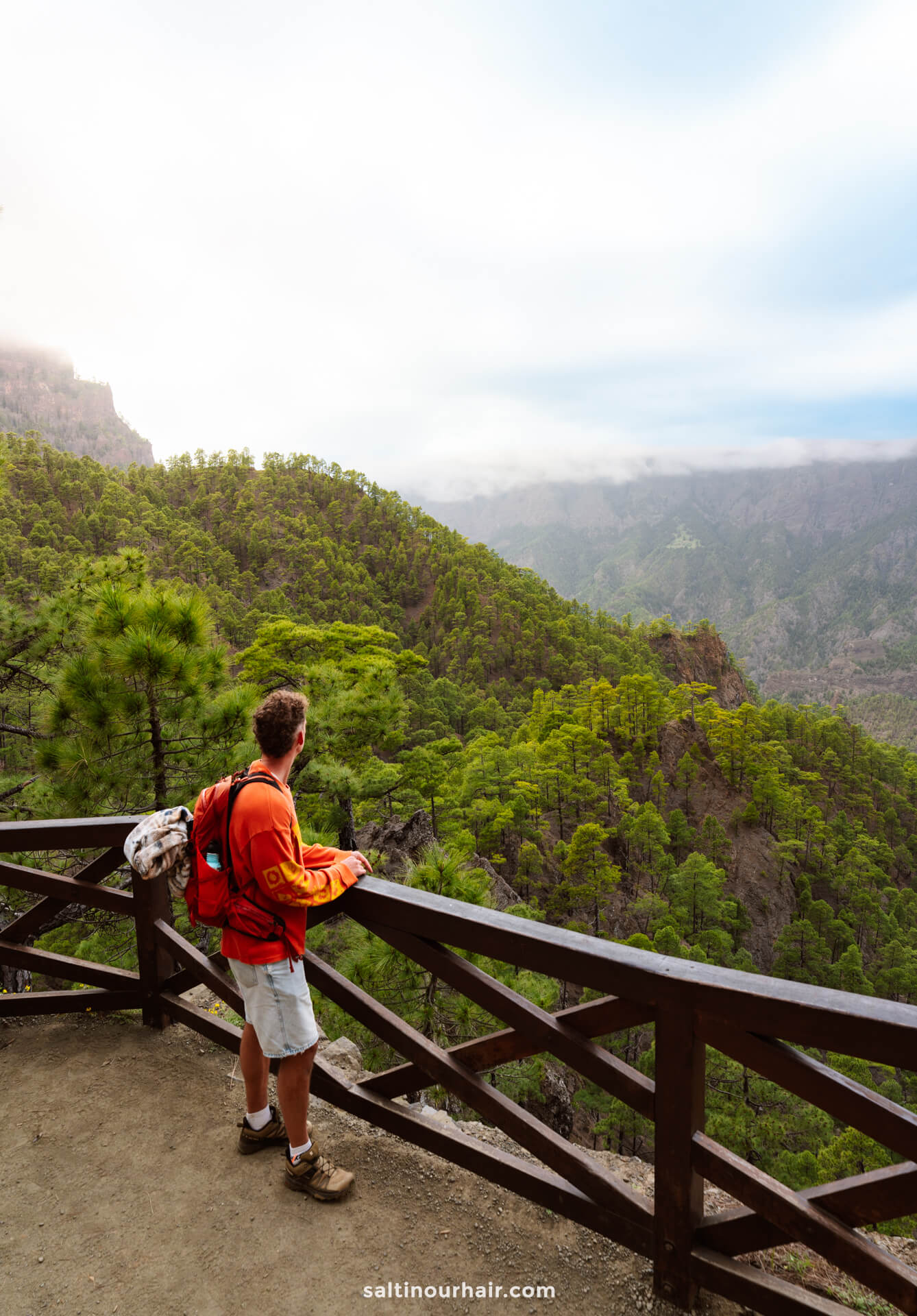
Ruta de los Volcanes
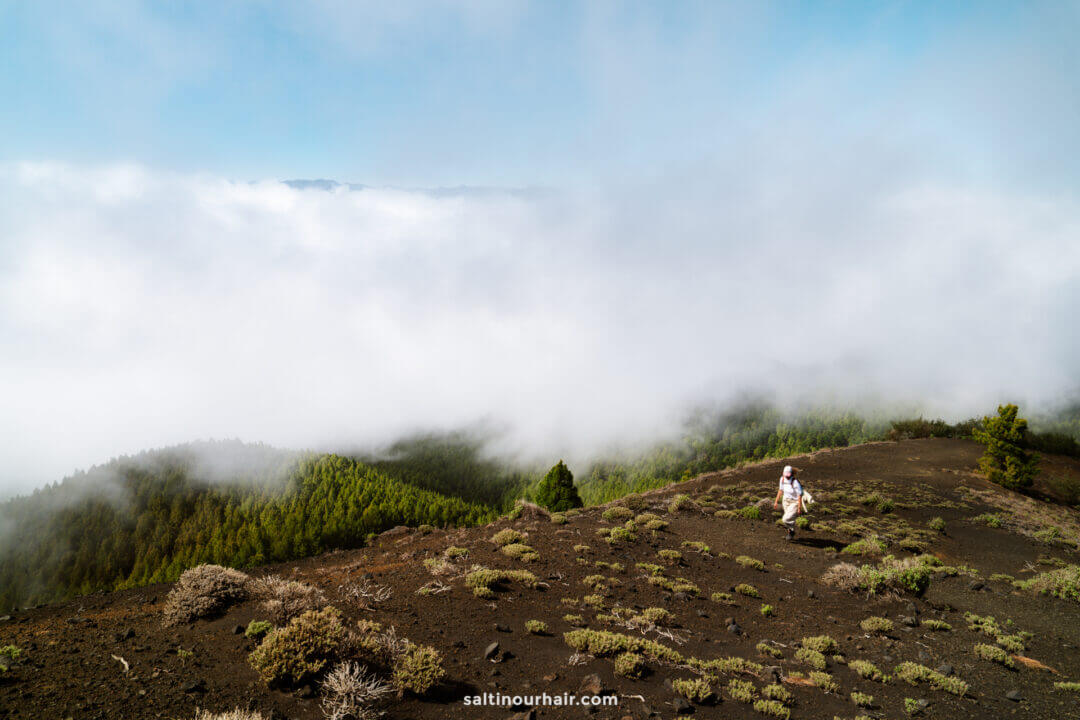
This is the hike you want to do on La Palma. The full Ruta de los Volcanes runs about 22 km from Refugio del Pilar to Los Canarios, along the length of the island, with serious elevation and a string of volcanic craters the whole way. This route is not a loop, but you can arrange a taxi to pick you up at the end, and that’s how most people do it.
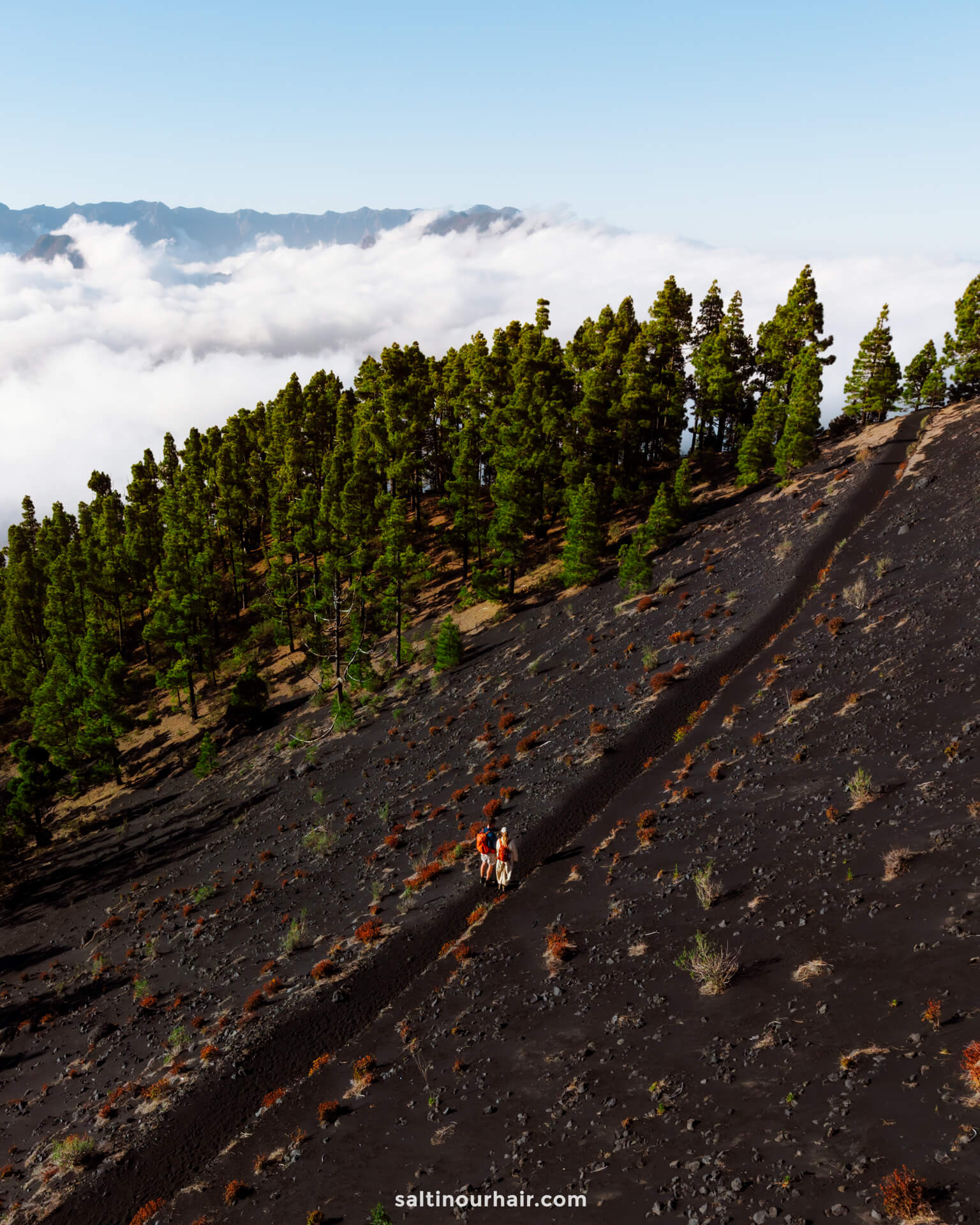
Ruta de los Volcanes return trail
We didn’t do the full route; we planned on a loop that we found on AllTrails. But the clouds came in halfway, and after continuing too long in the clouds and rain, we decided to turn around. There are several shorter alternatives starting from the same Refugio del Pilar trailhead, which you can find on AllTrails.
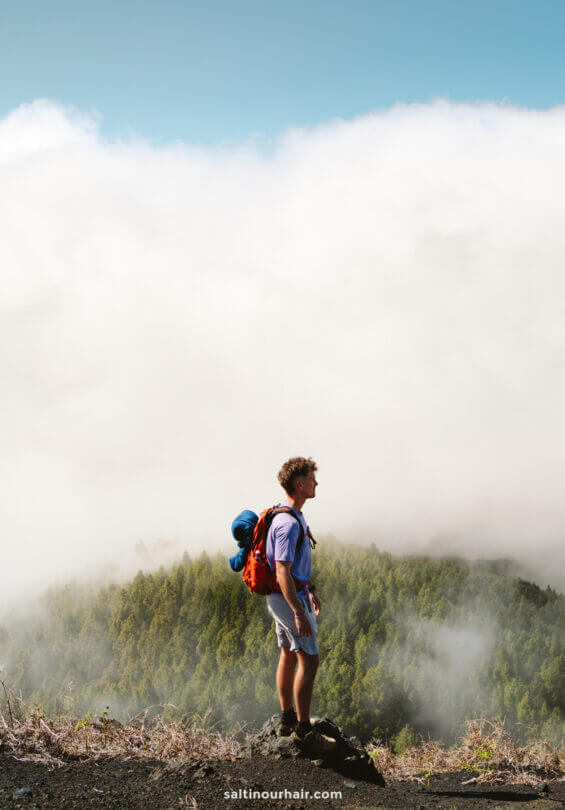
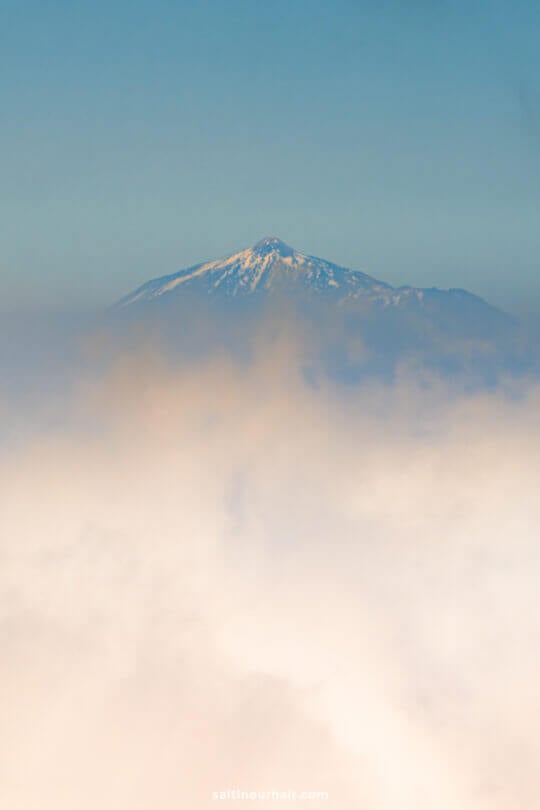
A few honest thoughts after our experience:
- You’re walking on loose volcanic gravel, and sections are steep. We never normally hike with poles, but this is the one where we wished we had.
- No shade above the cloud line and no water refills anywhere. Bring more sunscreen, water, and food than you think you need.
- Layers. The wind and fog/rain up there change everything.
- There’s not always phone service, so download your map in advance.
Mirador Astronómico del Llano del Jable
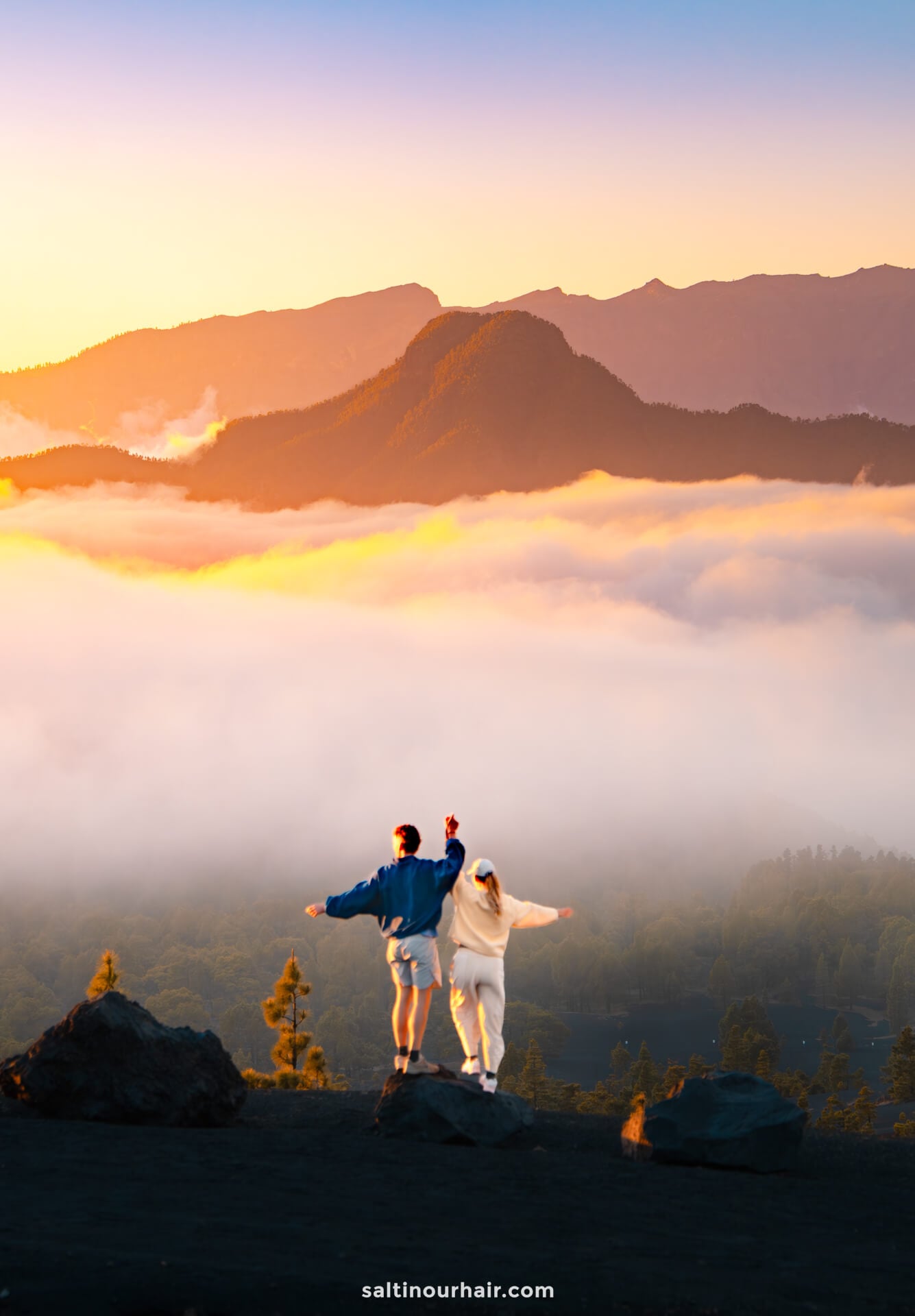
After your hike, stop close to Llano del Jable, an astronomical viewpoint at 1,341 meters. Sunsets from this road up give some of the best views on the island, and the viewpoint itself faces directly west over a valley and the new volcano. Black lava, green Canary pines, and the Atlantic — all from one spot. It’s also one of La Palma’s official stargazing points, with information panels for the constellations.
Stargazing at Roque de los Muchachos
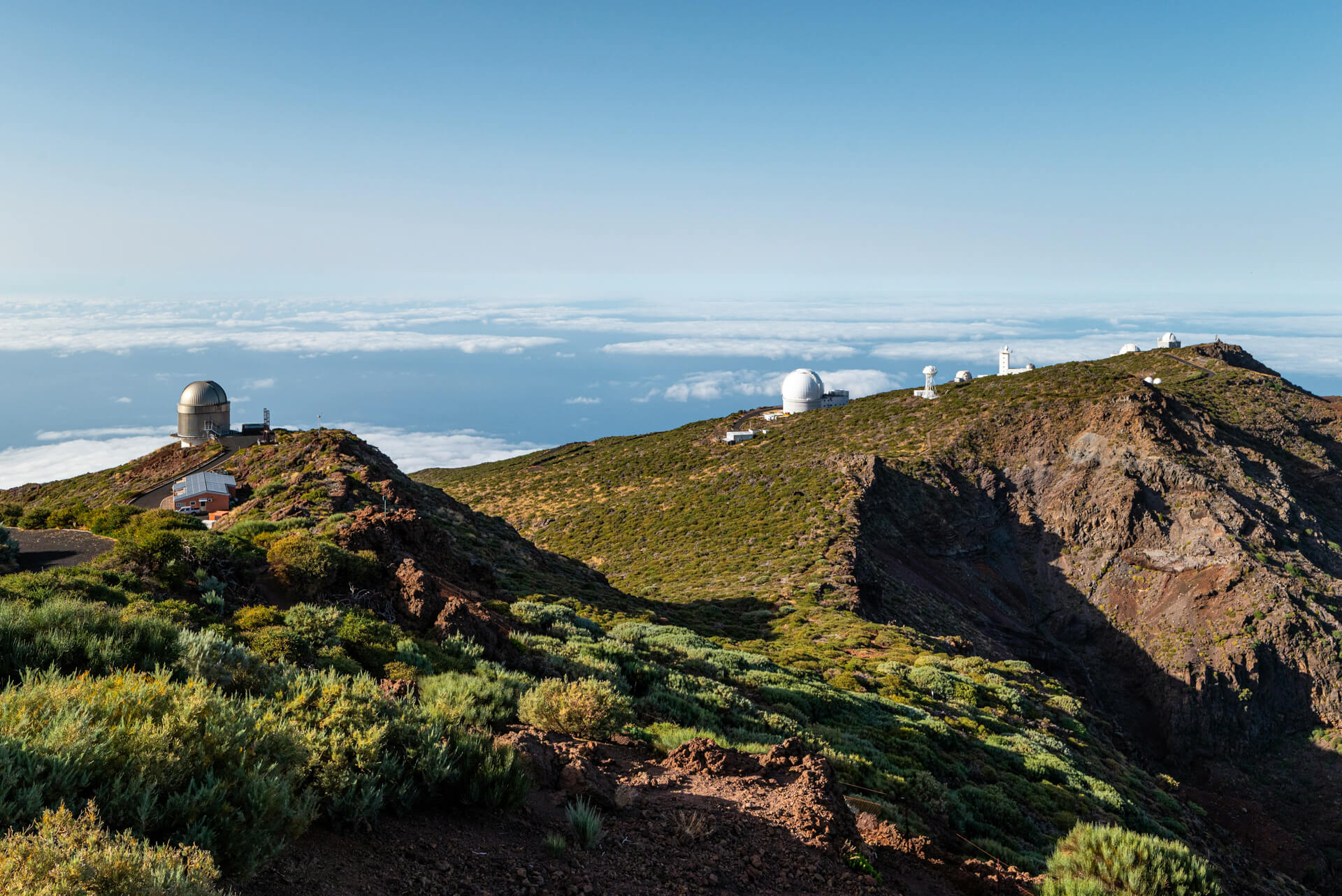
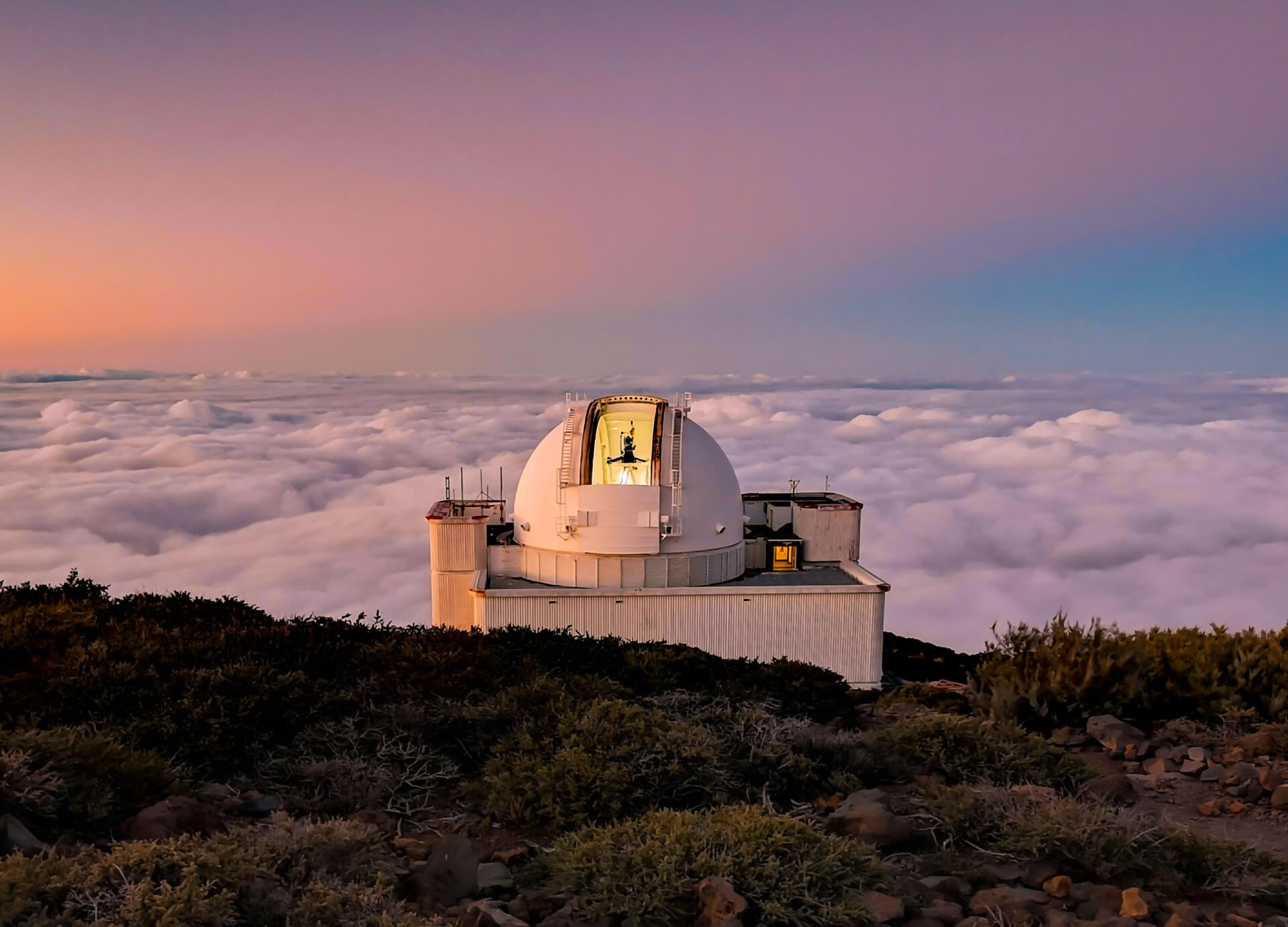
La Palma has some of the clearest skies in the world; the island even limits streetlights to amber color to protect the observatories on top. The best place to stargaze is Roque de los Muchachos, the highest point on the island, in the north.
We didn’t do a stargazing tour ourselves, as we’d already had a similar experience on Tenerife, but everyone we spoke to who did rated it one of the highlights of their trip. A guided session gets you a telescope, someone who knows the constellations, and access at the right time.
Salinas de Fuencaliente
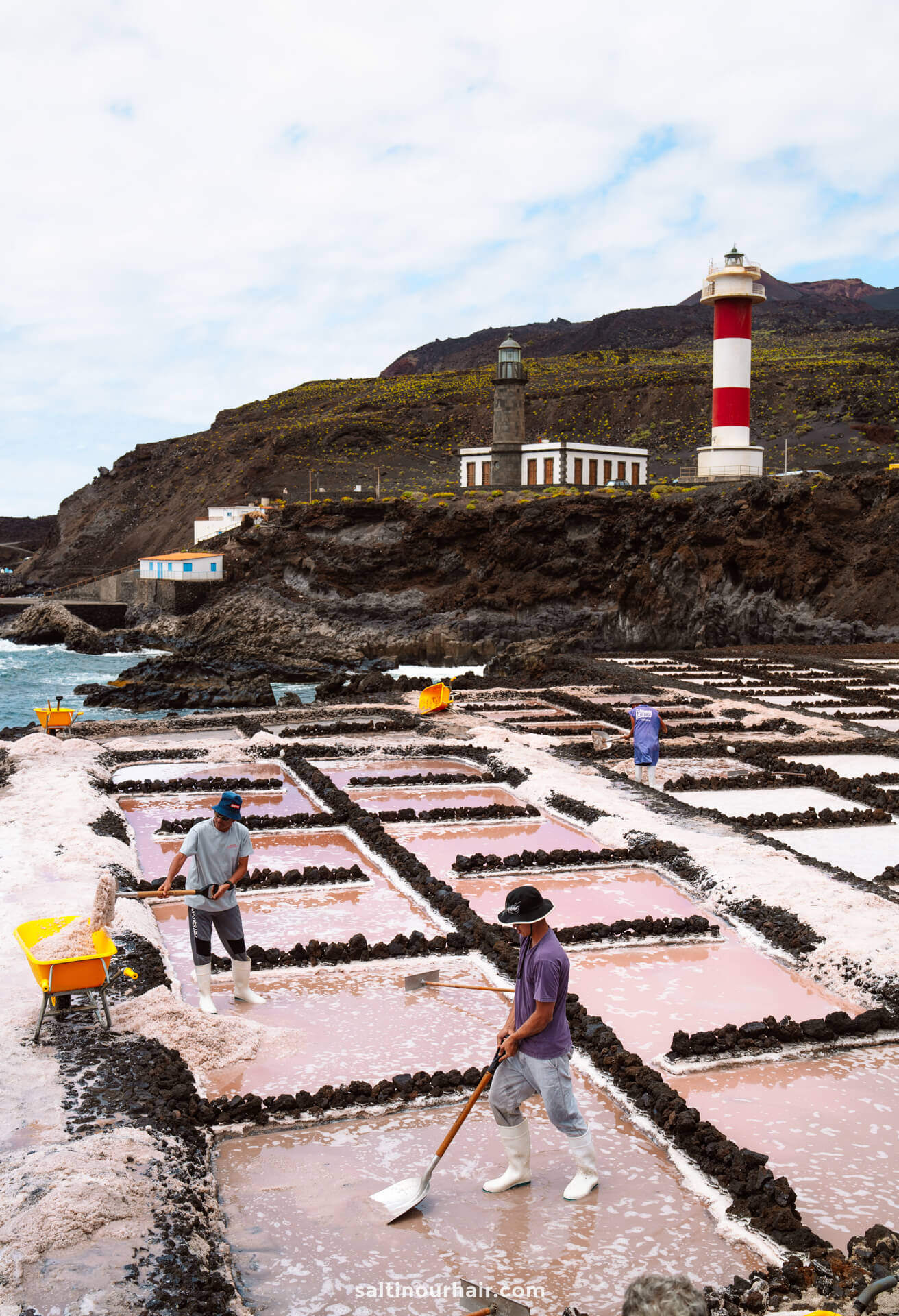
At the southern tip of La Palma, next to the lighthouse, you’ll find the Salinas de Fuencaliente: a working salt farm where they are hand-harvesting sea salt. The shallow pools turn pink due to a tiny microorganism. Walk around the pans and have a drink at their restaurant with ocean views.
Where to stay in La Palma
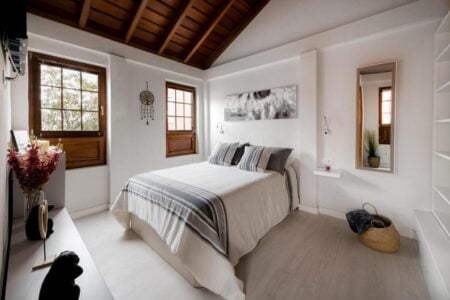
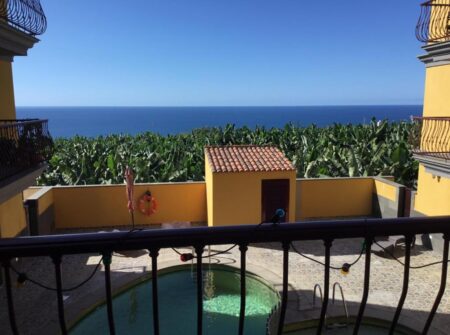
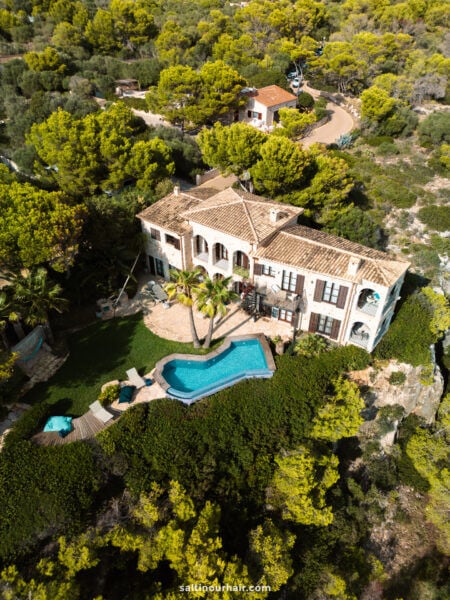
La Palma is small enough to do in 5 to 7 days. We split our days in La Palma between Santa Cruz de La Palma (3 nights) on the east side and Los Llanos de Aridane (3 nights) on the west side. You can do it from a single base, but two bases cut a lot of driving. The east side is the greener, lusher half of La Palma.

Getting to La Palma
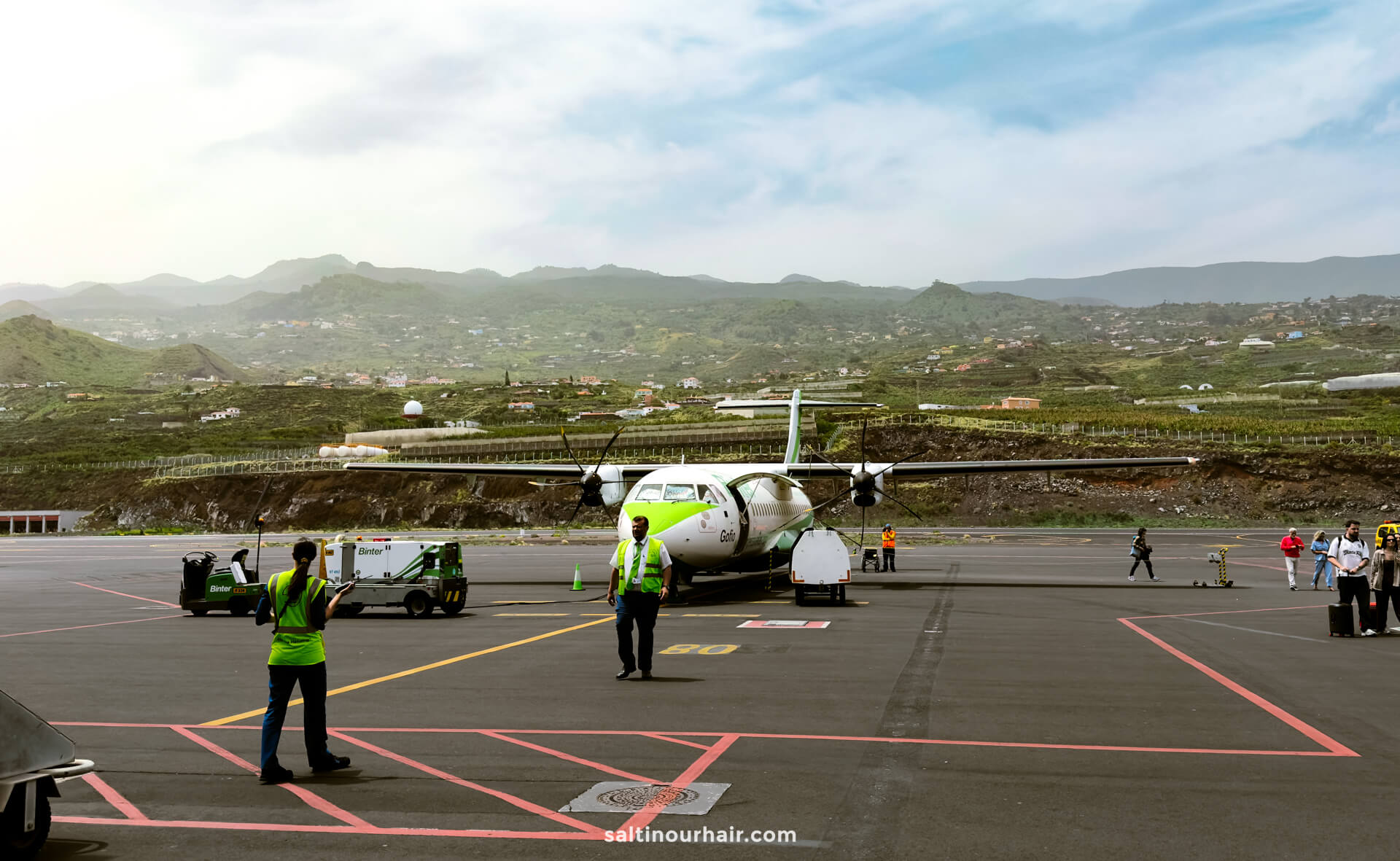
La Palma’s airport (SPC) is about 8 km south of Santa Cruz – it is a small and convenient airport. Direct flights run from Spain, the Netherlands, Germany, the UK, and Scandinavia. If there’s no direct flight from where you are, fly to Tenerife or Gran Canaria and connect with Binter or Canaryfly.
You can also take a ferry from Los Cristianos in southern Tenerife (2.5–3 hours). Which is great if you’ve already got a rental car on Tenerife and want to bring it across.
Renting a car
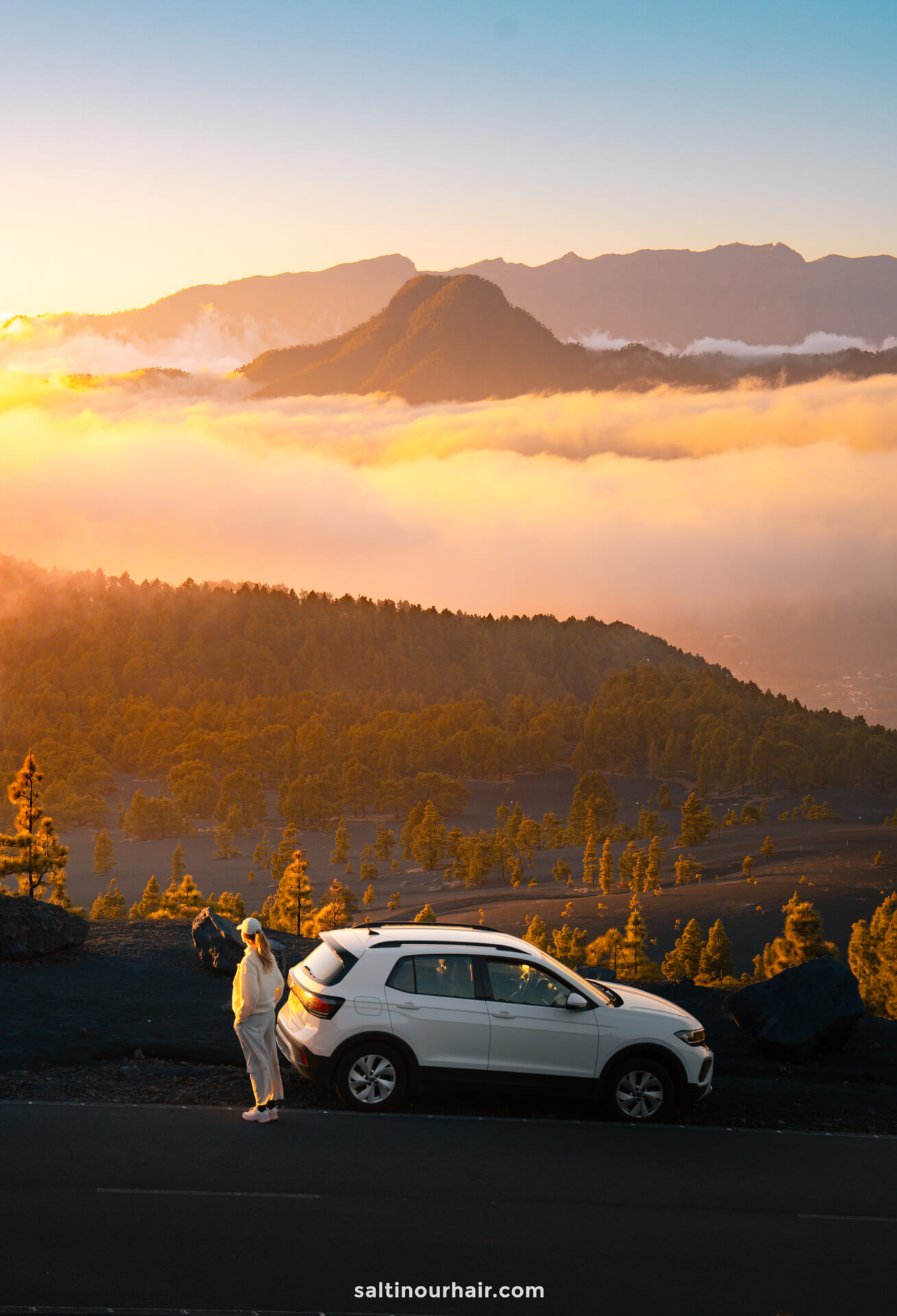
Visiting the best things to do in La Palma is only realistic by renting a car. Driving on La Palma is pretty easy but it’s good to know that the drives take longer than Google Maps suggests.
We recommend to rent a car in Spain through Sunny Cars with free cancellation and insurance included. Book your rental car here.
How much does La Palma cost?
Prices in La Palma were very good, especially for food. We had amazing local dishes at great prices; we never paid more than 35 EUR for a starter, two mains, and two drinks.
Best time to visit La Palma
April to June and September to November are the best months. It is warm, and far less busy than summer. We went in April, and the weather was on our side most days, with some clouds rolling in over the mountains in the afternoons. The east side has a bit more clouds in general.
July and August are the warmest and busiest, especially for the southern beaches. December to March is fine for hiking and town days, but the sea is cold, and Ruta de los Volcanes gets risky in winter.
Yes, 100%, if you love being active, as it is not really a resort-style island.
La Palma is known as “La Isla Bonita” and is famous for hiking, stargazing (it’s a designated Starlight Reserve), and the 2021 Cumbre Vieja volcanic eruption, which is the longest in the island’s recorded history.
We recommend 5 to 7 days on La Palma. Five gets you the highlights; seven lets you slow down and split your stay between the east and west sides of the island.
It’s not a classic beach destination, most beaches are black sand and the sea is cold most of the year. But there are a lot of beaches! Playa de Nogales is one of the most scenic beaches we’ve seen anywhere, and the natural pools (Fajana, Charco Azul, Achentive) are some of the best swims on the island.
Different. La Palma is smaller, less developed, and almost entirely about nature. Tenerife has more variety. We can’t choose between them.
By purchasing through our links, you support us at no additional cost.
Thank you for your support. ♥️
- Find Hotels via Booking.com
- Find a Rental Car via Sunny Cars
- Find Flights to Spain via Skyscanner
- Get a Travel Insurance via Heymondo
- Book Tours & Attractions via GetYourGuide
- Book a Bus/Train/Transfer via 12Go
Looking for more travel information? Plan a chat with us for personalised travel advice or get an answer from the Salt in our Hair Travel Community on Facebook.